Showing 673–688 of 805 resultsSorted by popularity
-
$110.00
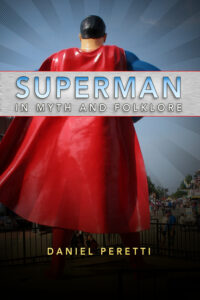
Superman rose from popular culture �comic books, newspaper strips, radio, television, novels, and movies� but people have so embraced the character that he has now become part of folklore. This transition from popular to folk culture signals the importance of Superman to fans and to a larger American populace. Superman�s story has become a myth…
-

$110.00
Contributions by Eric Bain-Selbo, Jeremy Barris, Maria Botero, Manuel “Mandel” Cabrera Jr., David J. Leichter, Ian MacRae, Alfonso Munoz-Corcuera, Corry Shores, and Jarkko S. Tuusvuori In a follow-up to Comics as Philosophy, international contributors address two questions: Which philosophical insights, concepts, and tools can shed light on the graphic novel? And how can the graphic…
-

$35.00
“Faster than a speeding bullet. More powerful than a locomotive. Able to leap tall buildings in a single bound . . . It’s Superman!” Bending Steel examines the historical origins and cultural significance of Superman and his fellow American crusaders. Cultural historian Aldo J. Regalado asserts that the superhero seems a direct response to modernity,…
-

$35.00
Grand in its scope, Asian Comics dispels the myth that, outside of Japan, the continent is nearly devoid of comic strips and comic books. Relying on his fifty years of Asian mass communication and comic art research, during which he traveled to Asia at least seventy-eight times and visited many studios and workplaces, John A….
-

$110.00
With contributions by: Leonie Brialey, MJ Clarke, Roy T. Cook, Joseph J. Darowski, Ian Gordon, Gene Kannenberg Jr., Christopher P. Lehman, Anne C. McCarthy, Ben Owen, Lara Saguisag, Ben Saunders, Jeffrey O. Segrave, and Michael Tisserand The Comics of Charles Schulz collects new essays on the work of the creator of the immensely popular Peanuts…
-

$110.00
“I think that if you’re an editor, and you do what’s right, you occasionally have to say ‘no’ to people. To the good people, the professionals, that’s fine. But the people who are ‘hacks, ‘ they won’t like that.” As an American comic book writer, editor, and businessman, Jim Shooter (b. 1951) remains among the…
-

$110.00
With contributions by: Eti Berland, Rebecca A. Brown, Christiane Buuck, Joanna C. Davis-McElligatt, Rachel Dean-Ruzicka, Karly Marie Grice, Mary Beth Hines, Krystal Howard, Aaron Kashtan, Michael L. Kersulov, Catherine Kyle, David E. Low, Anuja Madan, Meghann Meeusen, Rachel L. Rickard Rebellino, Rebecca Rupert, Cathy Ryan, Joe Sutliff Sanders, Joseph Michael Sommers, Marni Stanley, Gwen Athene…
-

$110.00
The superhero Wolverine time travels and changes storylines. On Torchwood, there’s a pill popped to alter the past. The narrative technique of retroactive continuity seems rife lately, given all the world-building in comics. Andrew J. Friedenthal deems retroactive continuity, or “retconning,” as a force with many implications for how Americans view history and culture. Friedenthal…
-

$110.00
The Allied victory in World War II relied on far more than courageous soldiers. Americans on the home front constantly supported the war effort in the form of factory work, war bond purchases, salvage drives, and morale-rallying efforts. Motivating these men, women, and children to keep doing their bit during the war was among the…
-
$110.00
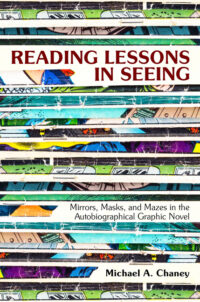
Literary scholar Michael A. Chaney examines graphic novels to illustrate that in form and function they inform readers on how they ought to be read. His arguments result in an innovative analysis of the various knowledges that comics produce and the methods artists and writers employ to convey them. Theoretically eclectic, this study attends to…
-

$110.00
Over the past forty years, American film has entered into a formal interaction with the comic book. Such comic book adaptations as Sin City, 300, and Scott Pilgrim vs. the World have adopted components of their source materials’ visual style. The screen has been fractured into panels, the photographic has given way to the graphic,…
-

$30.00
and global culture as well as examined for the rich meanings that such broad origins and re-workings create. This collection stands out as the first concentrated attempt to think through the meanings and significance of the superhero, not only as a product of culture in the United States, but as a series of local, transnational,…
-

$110.00
Jimmy Corrigan: The Smartest Kid on Earth was the first major UK literary prize awarded for a graphic novel. In 2002 Ware was the first cartoonist included in the Whitney Biennial. Like Art Spiegelman or Alison Bechdel, Ware thus stands out as an important crossover artist who has made the wider public aware of comics…
-
$110.00
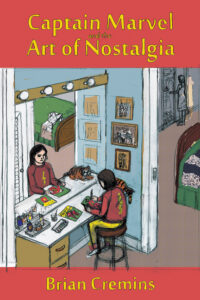
Billy Batson discovers a secret in a forgotten subway tunnel. There the young man meets a wizard who offers a precious gift: a magic word that will transform the newsboy into a hero. When Billy says, “Shazam!,” he becomes Captain Marvel, the World’s Mightiest Mortal, one of the most popular comic book characters of the…
-

$110.00
Peter Kuper (b. 1958), one of America’s leading cartoonists, has created work recognized around the world. His art has graced the pages and covers of numerous magazines and newspapers, including Time, the New Yorker, Mother Jones, and the New York Times. He is also a longtime contributor to Mad magazine, where he has been writing…
-

$110.00
Chris Murray reveals the largely unknown and rather surprising history of the British superhero. It is often thought that Britain did not have its own superheroes, yet Murray demonstrates that there were a great many in Britain and that they were often used as a way to comment on the relationship between Britain and America….