
The Un-Ethics of Watchmen Part II: The Under-übermensches
 For part 1 of this article, go here.
A central tenet of Aristotle’s outlook is that animals and we have souls, but we have rational souls and that’s what makes us human. Humans are beings of action, agents who act upon other things, instead of objects who are acted upon (see First Cause and The 4 Causes in Metaphysics). The result of all that – humanity and agency – yields responsibility through choice. So it’s an argument that starts with source and ends with aim (telos) – happiness, eudaimonia (as no sane being chooses unhappiness, but makes unfortunate choices due to ignorance and error – back to reason). And we gain happiness through the instrumental use of goods toward the ultimate good, which is true happiness (vs. illusory or merely apparent good). Ari posits that when the passions drive the bus, instead of reason, we are moved and that language reflects and helps to create our reality. Look at how we speak about things we experience: “It moved me.” That means we cared, we felt, we gave a damn. And the word “passion” means “to suffer,” and anyone who’s ever been in love knows that it’s both joy and suffering. So how do Moore’s characters move, instead of being moved as pawns in someone else’s game, not being masters of their own game?
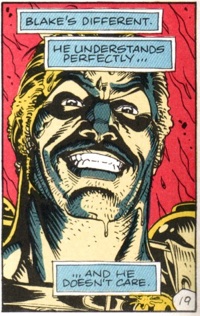
Blake’s “understanding of the human condition… he understands perfectly… and he doesn’t care…” is seeing the world through dirt-colored glasses. There is no optimistic rose in Moore’s world – only blood-red, black, white, yellow, crap-brown amidst the chiaroscuro. Blake is never treated as a human, and so never behaves like one and exists by objectifying everyone, creating a never-ending supply of objects that he moves and who move him. He’s operating out of Id (impulse, desire), too far gone to notice and, like Rambo, rise up against his objectification, and so there is no opportunity for redemption. His heart is turned to stone and would fall into Hell on the Egyptian scales of balance vs. the feather. But he’s already been living there all his life, so he has no thought of that, either. Fearless. Contempt and grandiosity are all smoke screens for despair, ego death. Murder is a form of suicide, as part of our psyche can’t help but recognize our own humanity in the humanity of others, even if that part of our empathy (see Hume) and that of those around us is dead or severely damaged goods.
So Blake is totally incapable of making any ethical decisions because he obviously does not know right from wrong (the legal definition of insanity). He only knows how to destroy, feel crazed pain even as he emotionally anesthetizes himself – goes for the thrill to bury the ill. Sleight of hand. Distraction. Noise. The only even remotely good thing he ever created, and that was purely by biology buried under all the sludge of his struggle for power (one of the übermensch impulses), was Laurie. The fact that he never actively harmed her is the one good thing he’d ever done, however passive, before being tossed out that window.
A little less broken but no less ethically horrific is Walter Kovacs, aka Rorschach. Having had most of the humanity beaten out of him since birth, we see his attempts to impose order on a meaningless universe, to stick up for the little guy as no one had ever stuck up for him, and to punish injustice (revenge is with malice – retribution is restoration of imbalances) with brutality so that they might fear him. Thus Kovacs the helpless misguidedly seeks power as his humanity. But all it accomplishes is eating away at his humanity, crippling him, ethically. He can’t impose order as, ethically, the only thing we have control over is ourselves. He can’t manifest order in the world, so he manifests what he’s good at, what he’d been taught since the womb – chaos, on his own terms.
Rorschach clings to principles as his humanity since he’s never known what it was to be truly human or to interact with true humans. But he’s able to recognize friendship and thank Nite Owl/Dreiberg for it (compassionate friendship being a higher ethical action – see Ari’s the Nicomachean Ethics). So his final stand to refuse to compromise his principles is not so surprising. If you take away the character he’s created, he’s left with no-self and that equals ego death, so he chooses death on his own terms instead of having any one mask or the whole group of masks or even Moore’s alternate universe decide for him. He chooses his own form of agency, instead of giving in to the powerful forces of objectification. Socrates on his head – drink that hemlock! It’s not noble. It’s not ethical – he doesn’t try to fix anything or stop the wrong-doing or turn in the wrong-doers, and silence is, ethically, cooperation with evil, even if it’s in a passive sense. It’s survival instinct.
Ozymandias’ working of the cold equations of killing three million in New York to save six billion is hard for any human mind to compass. He lost his humanity in the numbers and maybe that was the only way that his over-evolved intellect whose ethical mind-bus had not yet caught up to his calculation capabilities could deal with what they were facing. But it’s back to that you can’t use a moral evil (murder) to cure a physical evil and create any kind of moral good. Murder is the unjust killing (passively or actively) of another without fully sanctioned authority, by ethical definition. Veidt had gone off on his own, like all the masks by ’85, so had no warrant but his own advancement. Now whilst Nietzsche might say that that’s entirely appropriate for the fully-evolved übermensch, it’s not just about intellect. You need reason and passion, not either-or to be a whole human (Ari talks about moderating the passions for a virtuous human – metropatheia vs. Plato’s and the Stoics’ apatheia or no-passion, avoid suffering) Then again, some might say that he was the only one with sufficiently far-reaching vision to see what was coming and the only way to fix it and thus heroically took on the terrible burden of decision making that goes along with his great powers. But if you understand Nietzsche’s extra-moral stage of human evolution, nowhere does he state that it’s purely intellectual – it encompasses the whole person. It’s not just about a Utilitarian (Bentham, Mill) Calculus of Pleasure (the greatest good for the greatest number of people, including the one), which would never stand for such a solution, nonetheless (murder trumps everything – the greatest moral evil, since we all have inalienable human rights of life, liberty, and the pursuit of happiness and death ends that).
Moore’s portrayal of the smartest man in the world never shows us his other über-facets, save for maybe the über-hubris that goes along with being so intellectually beyond everyone, the evil über-geek, blond god gone coldly mad and hiding his madness behind math (the bright-n-shiny side of what Blake and Kovacs present as unabashedly dark). Veidt has lost touch with humanity and what he did could’ve been done by a computer just as easily (see Tres in Trinity Blood). Adrian the man’s not shown to suffer enough for his decision. He cares more for his genetically created big cat, Bubastis (and even to her he shows a disregard that would be objected to by Kant – mistreatment of animals cultivates diminished humanity), than he does for his colleague Jon. Not übermensch, just well-dressed and urbane über-geek. As Alexander, Aristotle’s greatest pupil, failed to recreate the world in his own evolved image – a noble intent – through violence and power-over (and became a horror to his mentor), so too does Ozymandias fail, ultimately, though he saved six billion minus three million. There must be another choice.
Back to a human perspective. The three thousand dead of 9/11 would fill Carnegie Hall to capacity and then some. Three million dead is the Mall in DC filled to Obama inaugural capacity plus 50%. The mind truly boggles at such numbers, we can’t comprehend the full 12 million dead in the Holocaust – it’s a defense mechanism. Moore turned to carnage on the grandest scale imaginable and unimaginable and does not allow us to turn away from the horror by simply vaporizing people. That would be far too antiseptic for our misanthrope’s sensibilities and allow us and his characters to get off far too easily. Instead, he has bodies piled high in gory glory (recalling on a larger scale the otherwise annoying distraction of the story of the Black Freighter and the scenes from the Holocaust documentary Night in Fog, though it was in black and white).
Dr. Manhattan’s cold logic to go along with Ozymandias at the end and thus remain silent and even withdraw is consistent with his character and demonstrates both his humanity and his inhumanity. He is the closest to the true übermensch in the good sense of the word throughout this story, even when he’s incomprehensible and infuriating to Laurie. Greatness isolates and separates. To be extraordinary is to be Other, no matter how much you hang onto a shred of your former self and your basic humanity. Compare Neanderthals to us, now, or the Cro-Magnons. The dots don’t connect. We don’t get it. Who can comprehend the mind of God? Moore hints at this with the Laurie-Jon arguments that share resonances with our American Puritanical Calvinism (and its work ethic) and Predestination. And even in his remoteness on Mars, Jon knows suffering. He feels.
Nite Owl wrestles with the decision – stay silent and allow the world to heal and rebuild, hopefully, in peace, or fight against a fait accompli way bigger than he is? So he knows he’s damned for doing so, but gives in and walks away and tries to live a normal life, make the sacrifice of the millions worth something and aim at the happiness he knows he’ll never totally have because he’ll always know how much it cost. He’s retained enough humanity to that point – make friends, fall in love, give a damn. But, once again, we see no self reflection beyond the crushing decision in the moment and then it’s move along there, nothing to see here. All the math’s been done for us. But you can prove anything with statistics and Bible quotes. There are lies and damned lies (Mark Twain) and this is the latter, for sure. They’re the lies we tell ourselves to keep the monsters away – but the monsters are always there. Dan feels the loss and horror more than the more intellectually evolved folks do (Jon and Adrian), and certainly more than the totally destroyed personalities do (Kovacs and Blake). He’s the man in the middle. And Laurie is his Greek chorus of the every-person’s outrage and non-comprehension. And the world is both object and instigator/catalyst, mover and moved.
Back to the three million sacrificial lambs. Agents have choice. Informed choice. These people were not informed of what might come and could not make an informed choice to sacrifice themselves, so they were, once again, objectified, pieces on a chessboard – offer up three million to the gods of chaos and you get six billion (less three million)… okay, good deal, sold! But it’s a Ponzi scheme. No one really wins. What are you left with after the deal’s struck and sealed? In many ways, the world psyche gets blasted back to the stone age and you start from scratch, only not scratch, because you’re wounded and scarred. There is no innocence. And no easy answers.
But, then again, it’s not easy being human. No one ever said it was gonna be.
Alexandra Honigsberg is an adjunct professor of Ethics at St. John’s University and a corporate Ethics consultant. A lifetime native New Yorker, she is a professional violist, a genre author (see Phil Brucato’s Raven’s in the Library anthology coming out in March), and works internationally on interfaith dialogue between clergy and businesspeople of all faiths, recently returning from a diplomatic mission to Turkey (summer ’08).
Further Readings (continued from Pt. I)

HarperCollins College Outlines (2): Introduction to Philosophy, Introduction to Ethics
Peter K. McInerney
ISBN#s 0-06-467124-0, 0064671666
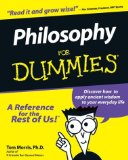
Philosophy for Dummies
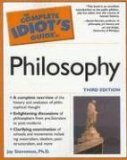
Idiot’s Guide to Philosophy