Monthly Archive: January 2015

Mike Gold: We Can Be Heroes

Whenever some sports superstar gets caught doing something untoward, the media wrings its hands and repeatedly shouts “What type of role model is this? Think of the children! Think of the children!” Invariably, the sports superstar in question points out he’s not a role model, he’s a ball player, or whatever. Usually he’s not very far north of childhood himself.

Yet, almost by definition sports superstars are super-heroes. They are imbued “with powers and abilities far beyond those of mortal men.” Michael Jordan, Bobby Hull, Muhammad Ali, Jackie Joyner-Kersee, Willie Shoemaker, Chris Evert… these folks aren’t simply super-heroes, they’re magicians.

When I was at the optimum time to adopt a personal hero, I chose Ernie Banks. Shortstop and later first-baseman for my Chicago Cubs, he joined the team after a stint in the armed forces and the Negro Leagues. He spent 19 seasons with the Cubs, which constituted his entire professional baseball career.

When the Cubs were at the bottom of the standings, which also was just about his entire career, Ernie not only stood out as among the very best, he virtually gleamed. Nobody seemed to enjoy playing baseball more than Ernie Banks. His trademark saying, “Let’s play two,” combined with his beatific look made you want to play as well.

Of course, had you been given the opportunity you would have been outclassed. Banks played in 14 All-Star Games. He was the National League most valuable player – twice. His lifetime stats: batting average .274, hits – 2,583, home runs – 512, runs batted in – 1,636. He made it into the Baseball Hall of Fame on his very first year of eligibility, with 84% of the vote. In 1999, Ernie Banks was named to the Major League Baseball All-Century Team.

Compared with the Cubs’ efficacy at the time, Ernie Banks was beyond belief. There wasn’t much of a team to help him.

When he hung up his mitt in 1971, Ernie started up a charity, became America’s first black Ford dealer, and worked at Chicago’s Bank of Ravenswood in public relations and new business development. It was in that capacity that I met my hero.

I was a co-founder of a youth social service program called The National Runaway Switchboard, and like all non-profits we applied for grants wherever we could. The Bank of Ravenswood was one of our many donors, and it was Ernie who handed us one of those huge photo-op checks. For all I cared, he could have handed me a bag of stale donuts. Meeting Ernie Banks was one of those genuine “hamina-hamina-hamina” moments.

Ernie was awarded the Presidential Medal of Freedom in 2013, and, yes, that’s President Obama putting the medal around his neck in the picture at the top of this column.

Damn.

Sometimes, nice guys finish first.

Ernie Banks died last Friday, at the age of 83. Thank you, Mr. Banks. Thank you for teaching this comic book editor what true heroes are all about.

Box Office Democracy: “Strange Magic”

I spent all week trying to scheme for some angle to not have to see Mortdecai. Maybe this would be a good week to go see a couple Oscar contenders that we missed, maybe our readers would rather hear about The Boy Next Door and see if there’s any chance of a J. Lo comeback, anything to keep me from having to write about a movie that looked to be Johnny Depp doing his best to murder his career on the same hill Mike Meyers went to for The Love Guru. Finally, late on Friday, I came up with a counterpitch that stuck: I should go see Strange Magic because it’s a George Lucas film (or at least a George Lucas story credit) and ComicMix readers probably have a strong opinion one way or the other on the man who launched and arguably sank two of the biggest geek franchises of all time. I regret doing it; I regret succeeding because I can’t imagine Mortdecai being any worse than Strange Magic.

(more…)

Emily S. Whitten’s Snow Stories

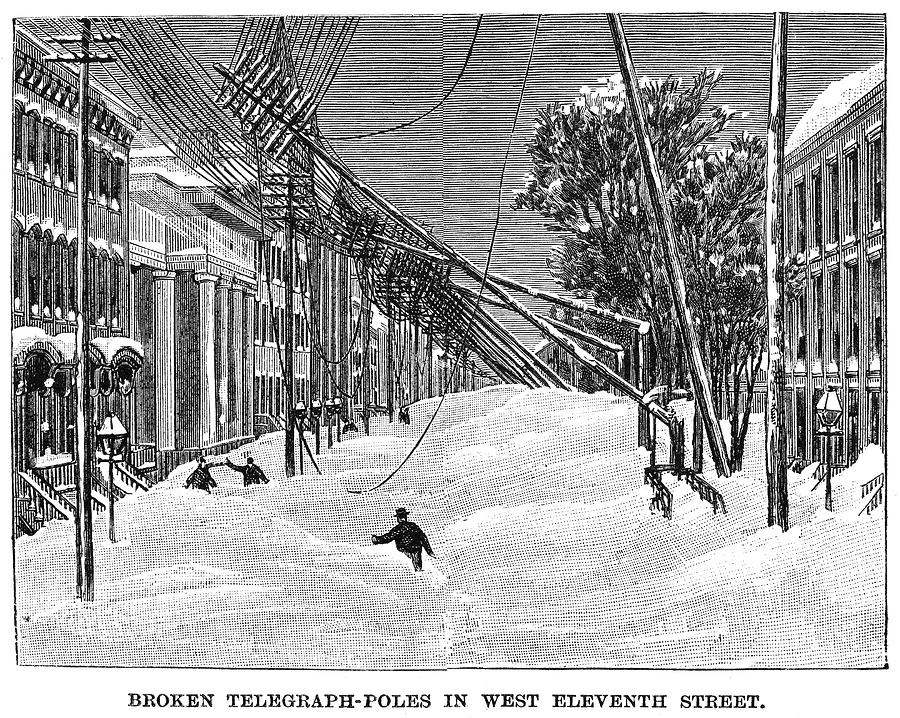
blizzard-4640604By the time you read this, we’ll have a much better idea of whether the snow predictions for Winter Storm Juno in the Northeast were accurate, but starting on Sunday with a tweet from the Bowery Boys, I had already started seeing people wondering if this would be a historic blizzard like the Great Blizzard of 1888 (or the apparently lesser-known but just as terrifyingly fascinating Children’s Blizzard of 1888).

The post from the Bowery Boys site (which is worth a read or a click for the pictures alone) stirred my memory – hadn’t I read something else once about the Blizzard of 1888? I didn’t really remember it as its own thing, but something was there. It took me a few minutes of cogitation, but I finally recalled Voices After Midnight by Richard Peck, a children’s or young adult book I read when I was nine or ten, that flip-flops between the story of a modern family who vacations in a historic New York City house and the story of the family that lived in the house before and during the time of the Great Blizzard. It’s a great book for that age group (singled out by Publishers Weekly for its careful historical background), and key events take place during the blizzard. Years after reading it, I can still recall tiny descriptive details about those key scenes, because they are so vividly described and seemed so real.

What I found funny, as I thought about it, was that the book is, as far as I can recall, my only prior encounter with the Blizzard of 1888. Here is one of the biggest snowstorms on record, which killed over 400 people and immobilized New York City for a week, and I only knew it from a fictional children’s book. But then again, it’s really not that odd after all, is it? We learn all the time about real things by reading fictional works, because anyone who’s a writer or even a regular reader knows that “truth is stranger than fiction” is more than a tired old cliché, and that often the things that stick in the mind the most in a good book are the ones that the author has pulled from reality (albeit with tweaks or modifications to fit them to the fictional world).

Often the best work we do is that which we’ve managed to base on something that really happened or some blazingly unique individual who was utterly real. Fiction that has been informed by a wider reality, no matter how otherwise fantastical it may be, is more gripping than the stuff that comes purely out of our own heads – because even the most creative of us can’t imagine the heights and depths to which other humans can rise and sink without observing them, or the potential that each of us has inside without seeing it come to fruition. And even the most creative of us might not be up to imagining a snowstorm that piled snow to the fourth floors of New York City houses, and toppled entire streets-worth of telegraph poles.

These thoughts dovetailed with a conversation I’d been having with a fellow writer, about the little life details that we find which inspire us to create more in-depth characters and worlds, and reminded me in turn of something Terry Pratchett once shared with me during an interview, about a beaded stone bracelet he’d once bought at a convention silent auction, that inspired the scene in Wintersmith (one of my all-time favorite Discworld books) in which Tiffany Aching sees the heart of Summer. It’s a beautiful scene; and it’s these little real things that become the building blocks of the bigger story for writers, and the reason why writers like Pratchett and Neil Gaiman consistently discuss reading non-fiction works (like Henry Mayhew’s London Labour and the London Poor) when talking about what inspires or helps their writing.

Just like fiction can be a door to a reality we’ve never encountered before, like the Blizzard of 1888, reality is what gives our fiction many of its best moments. As a journalist, I was trained to look for both the facts and the angles of a story I’m reporting – and likewise, as a fiction writer, I can’t help but muse on all the myriad interesting facts and odd story angles that existed in the events of March 11-14, 1888 in New York City alone, and what kind of fictional stories they could inspire (like a story about Augustus Post, who survived the 1888 blizzard and went on to scoff at the 25 inches of snow that came down during a blizzard in 1947. I bet he’d be a fun guy to write about). It’s a little bit mind-boggling, but also comforting, to think of all the material out there – especially when I’m feeling the effects of writer’s block. Because no matter what, there’s always going to be something waiting to inspire; and just like looking for the facts and the angle as a journalist, as a fiction writer looking to create a good story you just have to seek it out.

So off I go, looking for that inspiration, and saying unto all of you in the meantime, stay warm and safe out there, and until next time, Servo Lectio!


Mindy Newell: Bits and Pieces

I’d like to welcome Molly Jackson to the cacophonous, crazy, crackling, close comradeship that is the corral of ComicMix columnists. Molly’s first piece is on Star Trek: Voyager. She, like, me is a devoted fan of Captain Katherine Janeway, Commander Chakotay, Lt. Commander Tuvok, Lieutenant Tom Parris, Lieutenant B’lanna Torres, the Doctor, Kes, Neelix, and Seven-of-Nine.

In fact, I think that every columnist here is a fan of Star Trek, in its various incarnations…or at least one particular series or movie. (Hmm…is it a prerequisite?) Anyway, as I responded to Molly in the comments section, it’s a weird bit of synchronicity that her first column is about Voyager. Last week I finished binging on the entire series courtesy of my DVD set. I was so into reliving it that I was actually pissed off as the final episode ended!

Molly, you’re so right – it was a great, great piece of ST mythos (im-not-so-ho)! Kate Mulgrew – I can’t even imagine Genevieve Bujold in the role – as Katherine Janeway put as strong an indelible mark on her character as Shatner, Picard, or Brooks. (Bakula, im-no-so-ho, got shafted by the network – he never really got a chance to “quantum leap” Archer out beyond the original series bible.)

My only complaint is that final scene in the final episode. I wanted more. We should have seen the crew actually set foot on Earth again after seven years. Do you think that the surviving Maquis members would be arrested and dragged off to the jail? Do you think that Janeway’s fiancée would be there – and would he leave his wife home? Do you think they’d start an affair? How would Seven of Nine integrate in society? At the very least, we should have seen the reunion between Admiral and Lt. Tom Paris…and the Admiral’s introduction to his new granddaughter.

I forgot to mention last week that the January 16 issue of Entertainment Weekly (the one with Paul Rudd as Ant-Man on the cover) had a very nice piece in the “News + Notes” section on Kelly Sue DeConnick and Matt Faction as “The First Couple of Comics.” The very complimentary – and deservedly so! – story had a sidebar listing other “power” couples (as EW termed them) in the four-color world – Terry and Rachel Dodson, Mike and Laura Allred, Stuart and Kathryn Immomen, Walter and Louise Simonson, and Amanda Connor and Jimmy Palmiotti.

When I read the piece, I said to myself, “Hey, what about John Ostrander and (the late) Kim Yale?” I meant to send off an e-mail to EW, but being a lazy, procrastinating shit, I never got to it.

However, someone else did.

This week’s “Oscar!” issue of EW, dated January 30, letter writer Beth Rimmels of Long Island, New York, said:

“Loved the piece on Kelly Sue DeConnick and Matt Fraction, but when listing other power comics couples you omitted John Ostrander and the late Kim Yale. Their run on Suicide Squad put it on the map and influences the upcoming movie. Ostrander’s still turning out good writing, and Yale influenced many women who followed her.”

Amen, Beth. A-men!

Oh, and I think the casting of Paul Rudd as Ant-Man is brilliant.

There’s also a story in this week’s EW on Richard Selzer, a.k.a. Mr. Blackwell of the infamous “Hollywood’s Worst-Dressed List.” Alumni include Elizabeth Taylor Cher, Raquel Welch, Madonna, Dolly Parton, Whoopi Goldberg, and Lindsey Lohan. Got me to thinking of how the inheritors of critiquing celebrity fashion choices, like Joan and Melissa Rivers, who owned the red carpet for the E! network at events like the Oscars, the Golden Globes, and dissected star fashion on Fashion Police for the same network, would do at assessing the “costume” choices of the superhero population. Lots and lots of comments about wearing their “underoos” on the outside, I bet!

Sounds like an idea for next week’s column.

See you then.

John Ostrander: Secret Convergence Wars

Starting April 1, DC Comics is launching its new meta-Crisis series, Convergence, in which characters from different planets and timelines will be thrust together on the Blood Moon to fight fight fight. In May, all of Marvel’s multiverse will go blooey with bits and pieces being recombined into a single place called Secret Wars: Battleworld and, no doubt, every one will fight fight fight. Worlds/characters will live, worlds/characters will die, and nothing will ever be the same yet again.

It’s the same concept as DC’s Crisis on Infinite Earths back in 1985 (and Convergence, at least in part, is a thirty year Anniversary celebration of that event). For you young’uns who weren’t around, COIE was a 12 issue maxi-series with a very real purpose – to modernize and re-boot the DC Universe and continuity.

To be honest, I think that’s a necessity every so often for every continuity. Over the years, narrative barnacles form on characters and concepts and its good every so often to scrape them off and get back more to the basic concepts that attracted us to the characters/books/universes in the first place. That’s what the movies and TV shows made from comics have been doing – they take what is essential, respecting the source material without being bound to every bit of it, and re-interpreting it and presenting it fresh for a large audience, as if those stories were being created today. Fanboys may protest, fanboys may cry, but nothing remains the same.

IM-not so-HO (to steal from Mindy Newell), that’s a very good thing. It makes the characters and stories accessible to a larger audience, usually a much larger audience. It has the potential to grow the audience for these characters – except that the versions they see on TV or in the movies bear no resemblance to the versions they find in the comics. For example, if you like Chris Hemworth’s Thor and go to the comics, you’ll find Thor is now female. Remember that cool character the Falcon in the last Captain America movie? He now is Captain America.

It’s hard to make the comic characters track with their movie/TV versions but not impossible. When Jan Duursema and I were doing Star Wars set on the time between Episodes II and III before III came out, we had access to an early version of the script for III. We had to sign stiff non-disclosure statements but we were able to make our stories work within that time frame.

Of course, DC has said that the cinema versions of their characters do not match up with the TV versions but Marvel has gone out of its way to make TV and movies all part of one version of the Marvel Universe.

Marvel Comics has always disdained the reboots that DC has done, claiming they don’t need them but, in fact, they do. One of the really interesting aspects of Captain America is that he was frozen at the end of WW2 and wakes up in a modern world. That became a trope that you couldn’t keep repeating as the comics aged; it was no longer the Sixties and having Cap whine about being out of time for 50 years would be very tiresome. But being able to say he was thawed out in our day revives that trope and that makes it interesting again.

Continually re-inventing the characters can make them fuzzy and blurred. I’ve heard artists talking about “noodling” a page to death or erasing your pencils so often that you only get muck on the page. Doctor Strange has suffered that as every new writer coming on wanted to give their version of his origin with the “Everything you thought you knew is wrong!” schtick.

Crisis on Infinite Earths suffered from not having a clear idea of who the characters should be once you finished deconstructing what you had. To my mind, reboots need to get back to core ideas – what is unique about a given character or concept. Write them for modern audiences while capturing their essence which is what many of the movies and TV shows have done.

What will be most important about the two events – Convergence and Secret Wars: Battleworld – is what comes next. How will the companies and their writers and artists re-interpret their classic characters so they seem fresh and new and relevant for the here and now. Capture our loyalty again not with stunts (which may fuel sales but not imaginations) but with new visions of who these classic characters are. Make them familiar and yet new.

Good luck, Marvel and DC. Sincerely. Good luck.


Marc Alan Fishman: Into the Great Digital Marketplace!

When Unshaven Comics released its first publication, The March: Crossing Bridges in America, digital comic bookery was still mostly magic. The next year, when we released Disposable Razors #1, a glut of apps flooded the market promising the future for the indies, and ComicMix was knee-deep in online readers. Our books remained ink and paper. Our sales climbed.

The next year, a few of the apps went the way of Star Trek Voyager and Deep Space Nine. Disposable Razors #2 remained a glossy non-app. By the third issue, fewer apps remained commercially viable. Front-runners were forming, and Unshaven met every fan questioning when we’d offer our wares online met with the same confounded faces. Three more years passed, and we remained stubborn. And finally today, I’m happy to say we’ve joined the digital age.

You still can’t get our books digitally as of this posting… but it’s happening none-the-less.

In our defense, Unshaven Comics largely refused to take ourselves into digital comics because we were skeptical of a glut of things. Amongst them: how ubiquitous a platform and file-type might be, how payments would be processed, and how we could connect with fans if they downloaded our books (legally or otherwise) leaving us to sign napkins at the con for nickels.

Suffice to say, that glut is mostly dust now. ComiXology has arisen as the most adopted platform for digital books. Purchases on their app exist as licenses to read and enjoy for life. Of course if they go belly up, who knows. But I guess that’s part of the fun. Payments for indie guys like Unshaven Comics come once a quarter. And you get 50% of what comes in for your books. And as far as con-goers… well, it took long enough to grasp, but we finally get it. The world can exist with both a collectible market and a commodity market.

You can’t get Scott Snyder to sign Batman #75 on your iPad. Well, you could, but that might be awkward if you go back to read the issue. That, and people might think you stole your iPad from Scott, since he wrote his name on it, and that won’t end well for anyone. The digital comic marketplace is built for those looking to consume more than collect. Convention tables sell items for those looking for the opposite. I’ve long read e-mail chains from ComicMix’s Mike Gold over his continually growing digital pile of books he’s currently plowing through.

Quite frankly, who could blame him. The next time I know I’ll be leaving on a jet plane with hours to spend sitting, waiting, flying, and then sitting and waiting more… knowing that I could load up my iPad with a few volumes of all those books I’ve been meaning to absorb could be the difference between memorizing a SkyMall, or actually consuming something amazing. (Sadly, yesterday SkyMall filed for bankruptcy. I totally wanted one of those hot dog toasters because why not. But I digress.)

So, Unshaven Comics will soon be on ComiXology, via their “Submit” program. Off the cuff, it’s a great idea that is being crushed under its own weight. We Unshaven lads submitted our first issue of Curse of the Dreadnuts back in July of 2014. A few days ago, we were accepted in. Now, there was little to no explanation as to whether an initial submission takes longer than subsequent offerings, or if the program is simply that backlogged. And when I say “little to no” I mean “none.”

Beggars can’t be choosers, and I assume that the length of time it takes to get from submitted to being in-app is in direct correlation to the sheer number of indie creators attempting to push their way through. And given the likelihood of the mountainous sales one assumes come with e-publishing a book from the kids down the street, it’s not a surprise if ComiXology doesn’t place more emphasis on expedience with the program.

But let’s get back to the bigger point. After years of fighting it, Unshaven Comics has given in to the digital devil. The fact that with a little promotion, a little luck, and maybe just a lot more luck, we might move a few issues. And perhaps in another five months another issue will hit that digital rack, ready for hungry fans.

The system can only improve with time. Technology will continue to be adopted at incredible rates. Media will continue to exist in the shifting sands of ownership versus permanent rentals. And comic book creators will have a new avenue in which to compete with the big boys. And while our place within the app will be akin to our meager alley tables at the big conventions…

A spot on the floor is all it takes to earn a fan. Digital or otherwise.


The Point Radio: Long Live THE NERDS

The new season of KING OF THE NERDS is here from TBS, which gave us the chance to catch up with show creator and host, Curtis Armstrong who talks about the challenges in getting “good nerds” and how the whole idea came from a film that was a bit less than a movie blockbuster. Plus this weekend, Ben Barnes portrays Sam Adams in the three night mini series SONS OF LIBERTY and tells us what surprising facts he learned from the script.

On Monday, we head backstage to the set of USA Network’s SUITS with series star, Patrick Adams.  Be sure to follow us on Twitter @ThePointRadio.

The Law Is A Ass

BOB INGERSOLL: THE LAW IS A ASS #342: BATMAN’S SEPARATION ANXIETY

3801678-batman-eternal-004-2014-digital-nahga-empire-020-9661170Things aren’t looking good over in Batman Eternal. Not for former police commissioner Jim Gordon. Not for Batman. And not for us.

Not for Gordon, because eight issues into this fifty-two issue maxi-series, he’s still sitting in Blackgate Penitentiary awaiting trial for 162 counts of manslaughter. Not for Batman, because his best friend and former police commissioner is in Blackgate leaving Batman with interim commissioner Jack Forbes. And not for us, because eight issues into the fifty-two issue maxi-series that is Batman Eternal, we’ve realized its glacial pacing shows no signs of melting even with global warming. Seriously, this story has more padding than bubble wrap.

So what is it this time that’s got my spleen venting like a Yellowstone geyser? It’s interim police commissioner Jack Forbes. When we first met Forbes, back in Batman: The Dark Knight # 1, he was a lieutenant in Internal Affairs and had a bug up his butt about costumed vigilantes. Seems he longed for the good old days when the police were treated like kings and got to gun down the people they didn’t like. Also he was a police officer in Gotham City who wasn’t named Gordon, Bullock, Sawyer, or Montoya and that means he was…

(Come on, Sing Along With Bob. Unlike with Mitch, you don’t need a bouncing ball. You know the words.)

… Completely corrupt. As in, Forbes is so is Carmine Falcone’s pocket, that Falcone doesn’t have room for lint. After former commissioner Jim Gordon was arrested, Falcone used his influence on Mayor Sebastian Hady – a corrupt politician who’s not just in Falcone’s pocket, he might as well be Falcone’s house key – to have Forbes installed as police commissioner.

Forbes’s first act as commissioner – literally, I think he did it even before breathing – was to declare war on Batman. And that brings us up to speed on Batman Eternal. (Which may be the only time that speed and Batman Eternal appear in the same sentence.)

Even after Forbes was appointed commissioner, Batman did what Batman does. He rounded up bad guys. Particularly bad guys in the employ of Falcone. Then Falcone pulled on Forbes’s leash and Forbes ordered the police to release all those criminals that Batman “practically gift-wrapped” because, “Commissioner Forbes doesn’t recognize Batman. Says the city prosecutor has no authority to prosecute anybody brought in by a vigilante.”

First, how do you not recognize Batman? He’s 6’ 2” rocks a gray armored unitard and sports  a face mask with big pointy ears. How do you not know who he is when you see him? Second, Mr. Forbes, I know when Carmine Falcone says, “Jump!” you doesn’t bother asking, “How High?” you just hope matching LeBron James’s vertical leap is good enough, but when you do your master’s bidding don’t make it so damn obvious.

Forbes, if you want to say the city prosecutor can’t prosecute anybody brought in by Batman, because there weren’t any other witnesses to their criminal activities and Batman can’t testify, I could live with that, because that would be an accurate statement of the laws. But the city prosecutor has no authority to prosecute anyone brought in by a vigilante? Why don’t you just polish Falcone’s hip flask, while you’re making yourself at home?

Forbes’s attitude begs two questions. First, who is Commissioner Forbes to dictate the authority of the city prosecutor? The Police Department and the Law Department may both be part of the Executive Branch of Gotham City’s government, but they’re separate departments. The head of one such department doesn’t get to set the authority of what the head of another department can or cannot do. I’ll bet even the Mayor, the head of Gotham City’s Executive Department, can’t dictate who the city prosecutor gets to prosecute.

American governments operate under the principle of separation of powers and its attendant checks and balances. In most jurisdictions to maintain said checks and balances, the Executive Branch is charged with administering the law, but the Legislative Branch is charged with passing the laws. So it would be the Gotham’s City Council that would pass the laws establishing who the prosecutor may prosecute. That authority cannot come by fiat from the police commissioner.

The second question vis-a-vis prosecutors having no authority to prosecute criminals arrested by vigilantes: Didn’t you watch any Andy Griffith Show re-runs as a kid?

Current editions of Noah Webster’s seminal tome on word definitions defines vigilante as, “A person who is not a police officer but who tries to catch and punish criminals.” Let’s look at that.

Someone “who is not a police officer.” That’s you or me. Or Batman. Who “tries to catch and punish criminals.” I admit that “punish” part is troubling. Sounds a bit like a lynch mob. But Batman doesn’t punish the criminals, he leaves them for the police and lets the justice system prosecute them and punish them. So, let’s leave the punish part out of it. Then what do we have? Someone who is not a police officer, i.e., a citizen, who tries to catch criminals. According to Forbes, the city prosecutor doesn’t have the authority to prosecute anyone arrested in that manner.

What would happen if you or I saw a crime being committed, apprehended the perpetrator, and brought him to the police? We’d be making a perfectly valid citizen’s arrest. And if that’s good enough for Gomer Pyle, why isn’t it good enough for Batman?

Seriously, the ability of a common citizen to make a citizen’s arrest dates back in the good old days of common law. It continues today. All states allow citizen’s arrests. Most states have codified Citizen’s arrest in their statutes. In New Jersey, it’s N.J.S.A. 2A: 169-3, “Whenever an offense is committed in his presence, any constable or police officer shall, and any other person may, apprehend without warrant and process any disorderly person and take him before any magistrate of the county where apprehended.” (Emphasis added.)

So New Jersey has a law that allows Batman to do what he’s doing. The same law, by extension, must grant the city prosecutor the authority to prosecute the people brought in by Batman or other citizen’s arrests, at least implicitly. After all, if the law didn’t authorize prosecution of  citizen-arrested offenders, then why bother having a law allowing citizen’s arrests in the first place? So, Mr. Forbes, there’s a law that permits prosecution of those arrested by citizens and that pretty much trumps any edict issued by you.

Mr. Forbes, if you think your banning those criminals captured by Batman from being prosecuted will be a piece of cake, you’re wrong. Everyone knows, you can’t have your cake and edict, too.

Molly Jackson: Still Voyaging After 20 Years

(Ye Ed babbles: This afternoon we enthusiastically welcome Molly Jackson, our newest ComicMix columnist. As is our habit, Molly’s bio lurks below. She will be occupying this space revealing her cultural soul to us all each and every week! And now…)

This past week we marked the 20th anniversary of Star Trek: Voyager. I was 12 at the premiere of this show, and excited to see Captain Kathryn Janeway, a woman running a ship just like Captain Picard. Star Trek helped reinforce ideals taught to me by my parents, my religion and by scouting. Now at age 32 I still hold this show in such high regard, despite its flaws.

With the events happening today, the lessons of Star Trek, throughout all the series, become more and more important. The goal of exploration and discovery should be more important that the goal of power and conquest. Understanding cultures rather than controlling them. These humans came from a world that moved to where we want to be.

Voyager, in particular, resonated these ideals. A ship, lost in unknown space, rose above base desires to learn about other species. To explore new worlds and cultures. This show, like the other Star Trek series before it, studied racism and sexism in their own ways, using different species to fill in the roles of the subjugated in our own society. A captain ignored by another race for her gender shows her strength. A holographic doctor fights for his rights of personal ownership. These are just a few examples taken from real life into the mirror that science fiction always is.

Most important, Voyager taught that even at the heights that humanity had reached, they could still falter. Humans are fallible in the Star Trek universe. But rather than let them accept their failings, they did their best to rise above and grow as people. And who doesn’t want to live in their world? As Janeway remarked in episode “The 37’s” how humans built a world they could be proud of, where war and poverty don’t exist. Isn’t that what we are striving for today?

Yes, it has its cheesy moments. And yes, there are some episodes I would rather forget than watch again. But on the whole, who didn’t cheer for the little ship finding its way home. Voyager championed ingenuity and creativity in its crew. They had their moments of weakness. They had space battles and were willing to fight when they needed to. The show held to its morals, even when it suited them to cheat.

Go ahead and give Star Trek: Voyager a second or even a first watch. It’s available on Netflix and Amazon Prime. This time, look beyond the sets and the cheese and listen to the message of exploration and understanding. It may have been 20 years, but the message still holds true.

ComicMix Six: The Six Worst Movies of 2014

It’s easier to write bad reviews than good reviews, this is the secret of all criticism. Things that are good tend to be good in the same ways, in film it’s usually good acting, writing, directing, those kind of things. Things can fail in a seemingly unlimited number of ways. The movies that make up my bottom six movies of 2014 found some fantastic ways to fail.

only-lovers-left-alive03

6. [[[Only Lovers Left Alive]]] – Only Lovers Left Alive would probably work in any number of other media. It would be a good novella. I’d probably enjoy it as a concept album from an edgy rock band. It would make an amazing series of oil paintings. It is not what I want as a film. It’s a big static nothing with terribly little in terms of character arc and substitutes all of that storytelling energy for some amazing idle shots. I’m not interested in moving pictures where nothing moves and where the stories don’t involve solid characters. I don’t care how beautiful it is.