
REVIEW: Don Quixote A Graphic Novel Adaptation
Don Quixote: A Graphic Novel Adaptation
By Paul & Gaetan Brizzi
192 pages/Abrams ComicArts/$27.99 (hc)
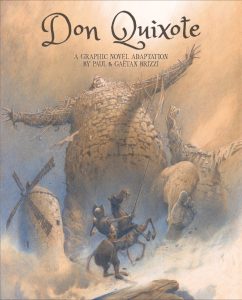 Considered the first modern novel, Don Quixote, written between 1605 and 1615, is a 100-page work that skewered people who put on airs and mocked chivalric love. Miguel de Cervantes took the elderly, poor Alonso Quijano and filled his head with dreams of heroic deeds done in the name of honor and love. Despite his weakened form, he dons makeshift armor, recruits local laborer Sancho Panza as his squire, and sets out to fight the good fight. He does this in the name of the most beautiful woman in the world, Dulcinea, who is never more than a dream.
The notion of living out that “impossible dream” seems worthy, but truly, Quixote is a vehicle for Cervantes to skewer those who put on airs and treat their fellow man with contempt.
The novel was an immediate hit and has been endlessly translated, with more recent editions released for the novel’s 400th anniversary. Most people know the broad strokes, thanks to cartoons and the smash Broadway musical Man of La Mancha.
So, how can you condense the mammoth novel into an under-200-page graphic novel? Twins Paul and Gaetan Brizzi bring their skills as illustrators and animators to the project, having already adapted Dante’s Inferno and Shakespeare’s Macbeth. They know how to capture the essence of each sequence, as well as what to keep and what to leave out. For example, the neighbor who becomes the Knight of Mirrors, hoping to show Quixote the error of his ways, returns later in the story as a different knight. The best-known moments—fighting windmills (thinking them giants) and treating a prison chain gang as an army—remain intact, as do Sancho’s plain-spoken laments about Quixote’s actions.
People across social strata are revealed to be cruel to one another and to their visiting guests, trapping the knight-errant and his squire into performing for them, as seen in the elaborate construction built to humiliate the pair.
The Brizzi’s bring a lush, deeply detailed illustrative grayscale style to the pages, reminiscent of Gustave Doré. However, when we see the world through Quixote’s addled eyes, the pages shift to vivid color.
If you never read the original in high school or college, this version will suffice.