
REVIEW: Movies go Fourth
Movies go Fourth
By Mark Edlitz
320 pages/$29.99 (h), $19.99 (sc)
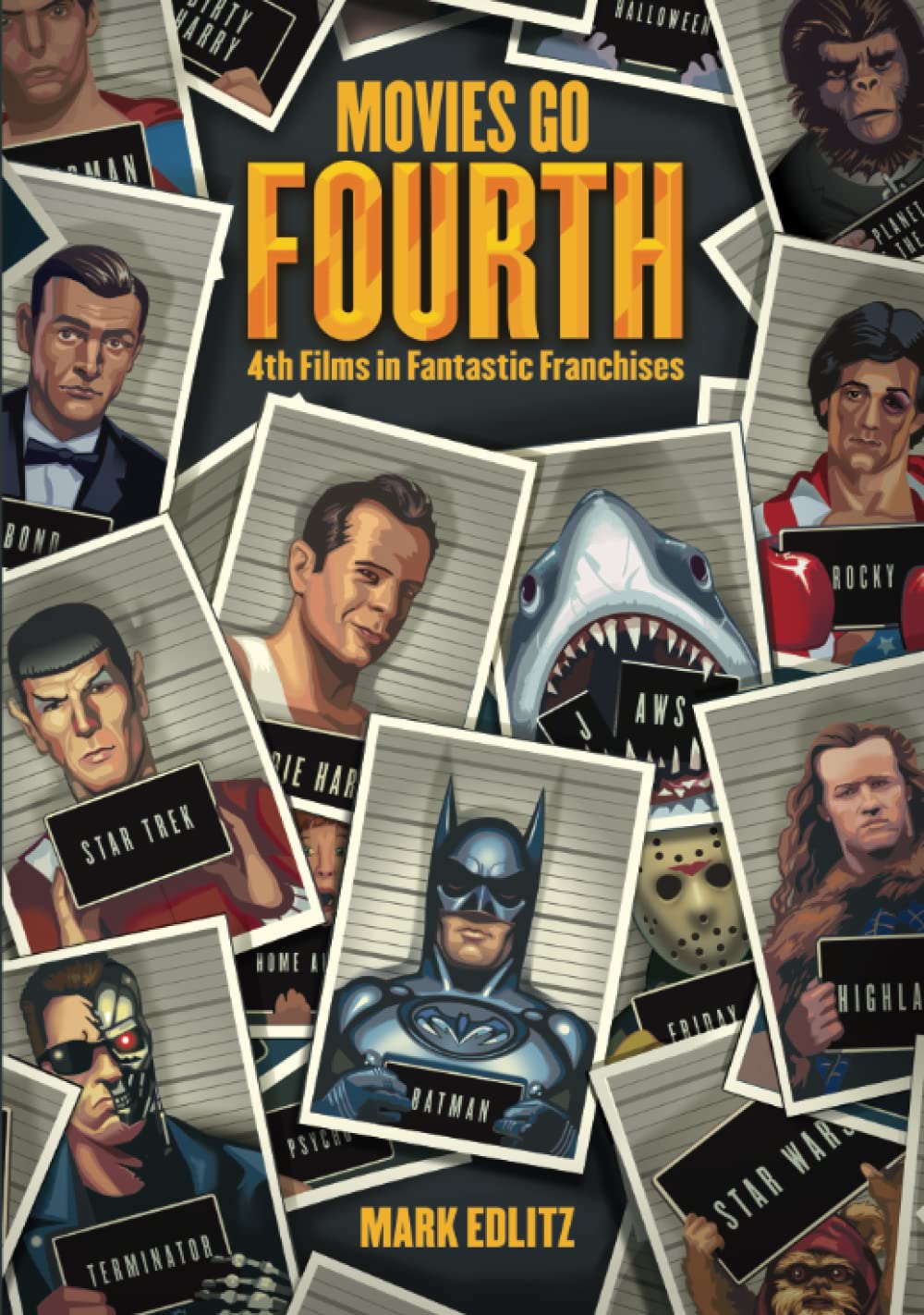
It’s a clever concept, examining the fourth film in a series or franchise. For every good one (Star Trek IV: The Voyage Home), there are multiple turkeys (Superman IV: The Quest for Peace, Home Alone 4: Take Back the House). Mark Edlitz, who enjoys deep dives into corners of pop culture few consider, released this one in 2023, and it’s an interesting examination of the category.
You don’t stop to consider how many franchises make it to a fourth film, let alone make it both good and commercially successful. He goes all the way back to the 1960s and the fourth installment of the James Bond series, Thunderball, but his introduction examines what came before, notably Universal’s monsters.
Looking over the table of contents, you nod and go, “Oh yeah, I forgot about that one.” But one stood out as a franchise I had never heard of: the sex comedy Eating Out.
He categorizes the movies by genre, which unfortunately means we join the superhero misfires, both Superman and Batman & Robin. But they set the tone, as he often gets the screenwriter or director to go on the record with the process and honest assessments of what is right or wrong. Here, director Joel Schumacher is honest about what went awry in Gotham City.
When he couldn’t get to any of the principals, he got creative, including actress Luciana Paluzzi, who played the Bond girl. The biggest reach was the creator of the robot used in Rocky IV. Overall, their perspectives are interesting, even if they had nothing to do with how the film got greenlit and produced.
Several writers and directors got their early starts with these films, and as rookies, their takes are interesting insights into the Hollywood machine. In one case, Bob Logan was asked to write and direct a film in a tight three-month stretch and, halfway through production, was told the production company had bought the rights to Meatballs and stuck it on the Happy Campers, forcing Logan to rewrite to incorporate elements that made it feel like it belonged. Star Corey Feldman was equally unhappy with the change.
One of the final sections is devoted to the fourth installments that never got made, which can be just as interesting a read. Here, storyboard artist Jeffrey Henderson gives his view of how Sony and Sam Raimi got close but not enough before the director walked, crashing the series.
For fans of specific films or how the sausage gets made, Edlitz offers useful insights, background details, and stories about how character can drive a sequel as much as a studio’s desire to make more money.