The Mix : What are people talking about today?

MINDY NEWELL: O, Tannenbaum, O Tannenbaum!

The Christmas tree. Big, small, authentic or fake, the object of worship at Rockefeller Center for New Yorkers and tourists, the spindly little tree that Charlie Brown adopts, and always, always, beautiful, I do hope you know that the evergreen tree (fir, spruce, or pine) didn’t grow in the hot, dry, climate of Bethlehem and Nazareth. (But the Egyptians did have a midwinter rite – see below.)

Courtesy of The History Channel and my fascination with pre-Judeo-Christian religions – I’ve delved a little bit into Wicca – here’s a brief history of our favorite symbol of the season, the Christmas tree.

For centuries in Europe and England, before the introduction of Christianity, plants and trees that remained green all year had a special meaning for people. To ward off the ghosts, witches, and evil spirits, they made wreaths of, and hung branches from, the fir trees that were “ever green.” During the winter months, as the days shortened and the world became dark and cold, it was believed that the sun god had turned their face from them. On the winter solstice, the shortest and darkest day of the year, the people would celebrate the return of the sun god, dancing in a sacred circle around a chosen evergreen tree (fir, spruce, pine) and light fires to bring back the light.

By the way, fellow comic geeks, in the Germanic and Scandinavian regions, the tree was called Thor’s Oak. Hey, Marvel, how about a Christmas Special featuring the tree and the Asgaardian?

Another origin has been proposed for our favorite Christmas image, that of the “Tree of Paradise,” which was used in the medieval plays performed on Christmas Eve to tell the story of Adam and Eve. It was decorated with apples – some say pomegranates – to represent the forbidden fruit, and Eucharist wafers to represent God’s deliverance; later on, in the 16th century, the Germans began placing the trees inside their homes, and the apples were replaced by shiny red balls.

So what were they doing at this time of year in the Fertile Crescent of the Mediterranean? Well, the Egyptians prayed to the Sun god, Ra, who would annually come near to death as the winter progressed. On the day of the solstice, when the sun – Ra – began to strengthen, the Egyptians would bring the green leaves of the palm trees into their homes, which symbolized Ra’s victory over death. (Hmm…palm leaves. Eternally green. Symbols of another resurrection one that is central to the Christian faith.)

The Romans celebrated the Saturnalia on the winter solstice, in honor of Saturn, the god of farming and agriculture, because they knew the shortest day also marked the return of spring and summer, when the land would be fertile once again.  The Saturnalia, by the way, was converted to Christmas, to mark the birth of Jesus by the Emperor Constantine, after he experienced a vision and ordered the conversion of all Roman citizens to Christianity. (And did you know that Biblical forensic astronomers believe that Jesus was actually born in the spring, according to the position of the stars at that time?) Anyway, the Romans also marked the Saturnalia by adorning Saturn’s temples and their own homes with branches of the evergreen trees that grew in that region.

The Celts of England, Ireland, and areas of northern Europe also celebrated the winter solstice with evergreen trees, to them also a symbol of eternal life. They would select a tree about which they danced, and lit bonfires to encourage the dark gods to leave.

When did the Christmas tree as we know first appear in America? Well, the Puritans – of Thanksgiving fame – felt that Christian worship had become frivolous and full of pagan rites. They believed that Christmas was a sacred, awesome – not as in “Awesome, bro!” but in its original meaning of “God-fearing and awe-inspiring” – outlawed the celebration of Christmas with trees, and even carols; those who dared were put in the stocks or worse!

The Germans, especially those who settled mostly in Pennsylvania, are credited with bringing the Christmas tree to America in the mid-19th century, but most Americans of the time were still heavily influenced by their Puritan roots, and believed the tree was a pagan symbol and refused to raise one either in their communities or their homes

Then, in 1846, Queen Victoria of Great Britain and her German-born consort, Prince Albert, appeared in the Illustrated London News celebrating Christmas with a tree. Like Anglophiles today who faithfully follow the affairs of the Windsors – and comic fans who believe that only the Brits know how to write comics – anything that came from across the pond was immediately declared fashionable and de rigueur.

O, Tannenbaum, O, Tannebaum!

And now for my weekly political comment:

If you watch either Jon Stewart on The Daily Show or Bill O’Reilly on The Factor, you know those two are at their annual “The War on Christmas” shenanigans, with Stewart poking fun – and getting pissed off – at one of O’Reilly’s favorite topics, as he rages against the ridiculous, “pinheaded” political correctness of the season.

And you know what? I totally agree with O’Reilly on this one. Oh, not on his overblown rhetoric – although that’s O’Reilly’s raison de guerre – but essentially, I believe he’s absolutely dead on regarding this one. The celebration of Christmas is an American rite of passage, which should be holy and sacred to those of the Christian faiths, but more often, these days, a commemoration of that other American religion – buying on credit and going into debt.

War on Christmas? Who’re you kidding, Mr. O’Reilly?

Next week: My Christmas, Chanukah, and Kwanza shopping suggestions.

TUESDAY: Michael Davis

JOHN OSTRANDER: Completing The Circuit

I love reading. Central to my being a writer is the fact that I love reading. I’ve always wanted to give back the pleasure I’ve gotten from it. I love when a writer pulls me into the world that they’ve created. It’s a magic act; words are used like spells to stimulate the senses. I see, I hear, I feel, I can even taste or smell depending on how adept the writer is and the words they use.

I love television and movies and other media as well but, for me, reading demands an active level of participation on my part. My imagination gets engaged, I think and I feel, heart and mind are involved. I feel I am in a conversation with the writer when the work is good.

Think of a toggle light switch. In the off position, the current doesn’t flow and the lights are not on. Flip it and the connection is completed and the light shines. Writing and reading are like that. The work exists but it is only when it is picked up and read that the circuit is completed.

The reader brings him or herself to the work, just as the writer does. What the readers take out of it depends on who they are. I have people write to me about the stories I’ve written and I always find it interesting; sometimes they find things here that I didn’t know was there myself. More often, they tell me things about themselves and that’s fascinating.

There is something alive in the work. Shakespeare is performed all over the world every day; Someone once said somewhere in the world he’s performed every hour of every day. The key is that his words still resonate on topics that are vital to our daily experience. They impact and influence people, change the way life is perceived. Shakespeare’s mind reaches us through the centuries and talks to us. The circuit is completed.

It’s not just Shakespeare. Charles Dickens lives as well and never more so than in this season. Don’t just watch A Christmas Carol – read it. I have yet to see any version – film, television, or stage – that captures the social commentary within the written work. It’s almost contemporary in its question of wealth, class, and our responsibility to our fellow human beings. One of the most powerful yet least used portions in the story is how young Scrooge, stuck at school for the holidays, finds comfort in books and how they come alive for him.

It’s not only with the writers who are dead. Think of contemporary living writers that you know, that you love. You may never meet them in person and yet you feel there is a bond between you and that writer, that you know them. When you read a good book, when it swallows you in, there is a now that you experience, that you create with the writer. The connection is complete; the current flows.

Make your life richer. Go read.

MONDAY: Mindy Newell

COWBOYS, MERRY MURDER, AND ADVENTURE FROM IPULPFICTION.COM!


Coming this Week on iPulpFiction.com [ Week of Dec. 11 – 17]


From the MARCH 1951 issue of Rangeland Romances

    
NO LOVE FOR A STEAMBOAT SIREN by Michael Vance
Nautical Mary Alice was steering a no-man course in life—till a handsome riverman cut across her vows.
[ Publisher: Black Mask – 7,700 words – 75¢ ]

——————————————

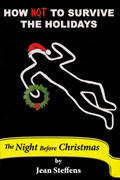
THE NIGHT BEFORE CHRISTMAS by Jean Steffens
A Special Ops veteran has 36 hours to get his niece away from a Mexican kingpin and home for Christmas.
[ Publisher: Desert Sleuths – 2,800 words – 25¢ ]
——————————————
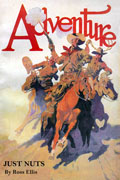
From the NOV 1914 issue of Adventure


JUST NUTS by Ross Ellis
There are no lunatic in this business adventure—just nuts.
[ Publisher: Black Mask – 2,600 words – 25¢ ]

FORTIER TAKES ON FAIRIES AND GOBLINS!

ALL PULP REVIEWS BY RON FORTIER

GLAMOUR JOB
By Doug Farrell
BookSurge Publishing
484 pages
ISBN – 10: 141967496X
ISBN – 13: 9781419674969
Release date – Sept 21, 2007
(fantasy – adventure – pulp)
No Contact Data

About the Author –
Doug Farrell has been a professional actor most of his adult life and spent several years performing comedy a Los Angeles improve troupe. He’s married to his best friend Ellen and raising three remarkable children with her. He taught college classes, was a vegetarian chef and installed home theaters. Recently at night he’s been a guide for ghost tours, telling Savannahs’ paranormal stories to people from around the world. This is his first novel.

Every now and then, I trip over a book that’s really hard to describe genre-wise and this is such a case. It’s a madcap adventure that falls somewhere between fantasy, slapstick comedy and social satire. That all these elements mix effectively and in the end produce a heady concoction of genuine adult delight is a testament to Farrell’s own imagination in brewing what he aptly describes as “A Fairy-tale for Grown-ups.”

The set up deals with a fairy war that occurred in another dimension wherein the goblin race lost and was forced to flee to our world, arriving in 1947, two years after the end of World War II. Convincing certain human scientist to help them, the goblins invented special disguises that allowed them to go undetected in our world and for decades walked among humans, some even interbreeding with them. Ultimately the same scientists who developed these sophisticated camouflages saw the potential for monetary wealth by using the same formulas to create beauty aids for human women. They create Glamorine, a Chicago based million dollar cosmetic empire built on the results of these techniques and certain globin magics.

The book’s theme plays with duel definitions of the word glamour. The first being a quality of fascinating, alluring, or attracting, especially by a combination of charm and good looks. It also means magic or enchantment; spell; witchery.

The protagonist is super model and the face of Glamorine, Laurie Morgan, whose grandfather was one of the scientist who created the company. As the story opens Laurie has become disillusioned by her near perfect life and is in the process of divorcing her loving husband, Nick. Laurie is suffering from ennui unable to explain her own dissatisfaction and believes she’s become trapped in a dull, boring routine of existence. No sooner is the divorce granted then she is contacted by a blue gnome name Hawley disguised as a little girl. He warns Laurie that her life is in danger. As if confronting an actual blue dwarf weren’t enough, Laurie begins to running into women throughout Chicago who looked exactly like her.

As paranoia begins to set in, Hawley explains that there is a goblin revolution in the works. After decades of living in secrecy amongst mankind, a group of goblin leaders have concocted a scheme to take control of Glamorine and replace its board of directors, including Laurie and her grandfather, with phony disguised goblins. Once they’ve achieved this end, they plan on poisoning the cosmetics produced to Glamorine to eliminate all of mankind and take over the Earth.

Needless to say having an army of vicious goblins out to do her in is more than enough motivation to snap Laurie out of her malaise and back into living at full tilt if only to stay alive. Before the book’s conclusion arrives, she will have been held prisoner in an underwater complex below Lake Michigan, met and been devoured by a fire breathing dragon and allied herself with tiny pig-fairies only she can see. “Glamour Job” is a rollicking tale that never lets up and is filled with satirical jabs at how we treasure a make-believe beauty that is simply an illusion devised by Fifth Avenue to milk millions from starry eyed little girls all wanting to grow up and become runway princesses. But do be warned, this is only the first chapter in a trilogy and the ending does come somewhat abruptly.

We also note by the print date that “Glamour Job” is four years old. All the more reason to seek it out as it might have flown under your radar. Urban fantasy isn’t one of this reviewer’s most favorite genres, but “Glamour Job” has enough action muscle to sustain it for even the most jaded pulp reader. If you are looking for something truly different and fun, you would be hard press to do much better than this book.

The Dark Knight Rises Teaser Poster Unveiled

Warner Bros. has sent us the teaser poster to next July’s The Dark Knight Rises, the third and final Christian Bale-starring film. Directed by Christopher Nolan, the film wraps up the story that began in Batman Begins. The first eight minutes will be shown in selected IMAX theaters this month, attached to Mission: Impossible – Ghost Protocol.

We’ll let the image do the rest of the talking.

Ready for an Ape-FIlled Christmas?

Twentieth Century Fox Home Entertainment releases the surprisingly satisfying Rise of the Planet of the Apes on Blu–ray and DVD Tuesday.

Check out this newly created interactive trailer.

Meantime, yesterday, Australian street artist and painter Anthony Lister began working on creating a fabulous piece of street art inspired by the Rise of the Planet of the Apes. Lister arrived in Southern California straight from Art Basel Miami Beach, the most prestigious art show in the Americas, where he painted several murals across the city. The mural is being painted at 7769 Melrose Ave in Los Angeles across the street from Fairfax High School, and Lister will be there until Monday afternoon.

We hope to share a timelapse video of the work from start to finish some time next week, after Lister’s work is complete.

Recreate your Favorite Scene from A Christmas Story and You May Win a Prize

Warner Home Video Triple Dog Dares You!  The studio is inviting fans to create their favorite scene from the classic A Christmas Story for a chance to win a trip to the A Christmas Story Museum.

Ian Petrella who starred in the movie as Ralphie’s little brother explains the details:

We also have a DVD copy of the movie to give away. All you need to do is comment by 11:59 p.m., Wednesday, December 14 and tell us your favorite Christmas story. The judgment of ComicMix‘s judges will be final. The lucky winner will be notified by e-mail.

MARC ALAN FISHMAN: What I’m NOT Thankful For

fishman-column-art-1111210-3421978I hope everyone’s Thanksgiving holiday was amazing. I myself hosted festivities for the first time in our new home. It was here, in 2011 where Marc Alan Fishman finally graduated from the kiddie table. Looks like all it took was making a meal for 10 people, in my own home. But with the assistance of my fantastic in-laws, and even more fantastic(ly pregnant) wife… we done pulled off a doosy. After last week’s lov-in, I unbuckled my belt, let my gut out, and took stock in those things that didn’t quite make me a happy camper. Sure, my initial articles covered some of those (The X-Men, Barry Allen, and Hal Jordon to name a few)… but here we are, nearing the end of the year. What exactly happened that cause my beard to stand on end? Let the hatespew begin!

Epic Events of Extremely Excessive Inanity

To be truly fair, I could spend the entirely of this editorial tearing DC and Marvel both for their predilection to create crappy crossover events. But let’s boil it down to the brass tacks, shall we? Simply put, these money-sucking whores create bloated wastes of ink and paper, all based on the idea that “everything you know will change.” This of course, preys on our fan-boy fear of being left behind. And it would seem over the course of the Aughts, such as they were, the Big Two have perfected their scheme:

Create a main book where all the bullet point action takes place. A few not so significant people will die. One or two major ones might kick it too. A great evil rises up. It looks insurmountable. Then a legion of the most marketable heroes get some brilliant form of upgrade, or a lost and forgotten hero comes back from the dead, or some other deus ex machina reveals itself in the nick of time for one last issue of double page Photoshopped explosions. What follows is generally seven to twenty seven epilogues setting up the next six months of editorial mandated character changes.

But it’s never just that one main title now, is it? These mega-loads of mega-suck bleed into the entire continuity of issues. Soon every book you’d normally pick up features the event-du-jour’s nom de plum across its masthead. What follows is generally exposition taken from bullet point A before bullet point B from the main series. Not reading that series? Well, I guess it sucks to be you. I was loving, L-O-V-I-N-G Matt Fraction’s Incredible Iron Man series until Fear Itself. And for four issues straight, all the world building he’d done was cast aside so I could follow Tony into Asgard to get drunk, swear, and make some action-figure-waiting-to-happen weapon variants for random heroes to use. Did I follow Fear Itself? No. Thanks for wasting my time, money, and love of the Iron Man book.

Don’t think for a second DC skates by here either, kiddos. Those cash-craving carnivores did one worse; they let the deus ex machina implode their entire line of comics. Flashpoint, by and large, will sit in my collection next to Countdown to Final Crisis as a testament to everything wrong with comic books today. “But why did you keep buying them, if you hated them so much?” Well… One – I’m a masochist. Two – the series promised to feature at least one or two characters I’d normally not get to read about. Three; – I didn’t want to come out of the other side confused as to why everything changed. Flashpoint even had the nerve to release wave after wave of mini-series to take us around this “Age of Not Quite Apocalypse.” And while Batman: Knight of Vengeance delivered an amazing Elseworlds tale, it was just that… An Elseworlds tale. Slap any title card you wanted on the cover, Dan, Geoff, and Jim. We all knew it should have said “Flash Point Over There and Distract The Fanboys While We Hit The Reset Button.”

4/5ths of the DCNu

And since we’re on the subject… the next thing that ground my gears was the rebooting of the DC Universe itself. I give credit where credit is due. It was a bold move that in fact did raise awareness, sales, and general levels of hope amongst the comic book readers of the world. But by and large, it was all smoke pellets and Mirror Masters.

Let’s face facts. Superman, Wonder Woman, the JLA, and Aquaman all got the reboots needed to make them matter again. Batman and Green Lantern may have gotten shiny new #1s on their books, but didn’t reboot a damned thing. Batgirl got to disappoint the handicapped community (not that the book is bad mind you, but still…), and a plethora of bad ideas were hurled out with hopes any of it would stick. What we’re left with is a mangled mess of a few fantastic books littered amongst total garbage. All the solid character-building moments that gave DC a strong legacy and continuity were thrown out with the bath water in hopes that a #1 and a power-cycle would somehow make comic books appeal to the masses who aren’t reading comic books. Guess what? Sales may have increased, but not by that much. Walk out on the street today, and ask a passer-by who OMAC, Voodoo, or Captain Atom are. Don’t be surprised when they need to Google it.

It’s still too early to say exactly what impact this reboot is going to make. Suffice to say, I hardly believe I’ll be telling my son “Oh yeah, in 2011, it all changed. DC created the new paradigm by which all comic books were created.” More likely? “Oh yeah, in 2011 DC rebooted everything, because they figured they’d move more issues if they had #1 on them. Superman turned out really good. I kind of forgot everything else.”

The Fallacy of Death in Comics

If 2011 has taught us nothing else, then we should all learn this: Death is meaningless in comic books. In the long-long ago, in a time and place far far away from here… dying meant dying. No mysterious body swaps. No time-bullets. No psuedo-science backtracking. Dead meant dead. In 2011, Marvel iced the Human Torch, Bucky Barnes (again…), and Thor (again, again). Human Torch didn’t even stay chilled long enough to be missed. With Fantastic Four #600, his mighty resurrection (as predicted by just about everyone) came to pass. In Fear Itself, Bucky and Thor each bit the dust. Who here is man enough to say they’ll stay that way for 365 days? With The Avengers movie hitting megaplexes next summer, I doubt Mr. Odinson will be resting for even a fortnight. Oh, and it looks like the Phoenix force is coming back too. As it stands, I can’t even tell you for sure who is alive and who isn’t. Only Ultimate Peter Parker seems to be the most likely candidate for a spot next to Gwen Stacy of the 616 in the land of the “neva’ coming back.” And thanks largely to Flashpoint, DC was able to kill off whole portions of their catalog, with the promise to thaw them out the second sales dip. Did someone say JSA?

Goodbye 2011. May 2012 boast less deaths and less events. See you next week, when my column resets back to #1.

SUNDAY: John Ostrander

The Point Radio: COMMUNITY – What Went Wrong?

It was a pop culture favorite, but not a ratings grabber for NBC. Fans of COMMUNITY are outraged that the network has decided to put the show on hiatus. So what went wrong? We talk to creator Dan Harmon on the dangers of bedding “too cool”, plus Stan The Man strikes up two movie deals and the 24 film is back on track.


The Point Radio is on the air right now – 24 hours a day of pop culture fun for FREE. GO HERE and LISTEN FREE on any computer or mobile device– and please check us out on Facebook right here & toss us a “like” or follow us on Twitter @ThePointRadio.