Tagged: Batman

INTERVIEW-ELIZABETH BISSETTE, RELATIVE TO THE MAN WHO CREATED THE SPIDER!

ELIZABETH BISSETTE, Writer/Performer/Relative of Pulp Icon

67903_1614855980306_1503511753_1549465_3570782_n-1490351
Elizabeth Bissette, wearing Norvell Page’s fedora and holding his .22

AP:  Elizabeth, ALL PULP is really excited that you have time to sit down with us.  Before we talk about your very special connection to Pulp, can you give us some background on yourself?

EB: I guess Southern Gothic Renaissance woman might sum it up best. I’m a music, art and culture writer and one day had the privilege of talking with Mike Seeger (
http://mikeseeger.info/), a folk archivist and musician Bob Dylan credits with being the reason he wrote his own songs. It changed my life. I spent the past five years or so since then doing a Lonesome Liz (http://www.myspace.com/lonesomeliz) version of what he did; traveling and learning as much as I could from other artists and musicians I ran into; writing about them along the way.

Through the course of all this I’ve become an Outlaw Americana singer-songwriter and visual artist, with the official Outlaw nick-name Lonesome Liz. (Hellbilly Outlaw authority and filmmaker Cuzn Wildweed (http://www.myspace.com/cousinwildweed)  told me Outlaws had nicknames and that was bound to be mine; I figured he knew more about it than I did and have kept it ever since.) I also play a little banjo; had the good fortune of learning a little from a man in Appalachia named Bill Garvin, who played with Bill Monroe early on.

There’s more to it than that, but that’s the backbone of it. Mr. Seeger died last year and my interview was the last he did. I can’t thank him in person anymore for how our talks were so pivotal for me and how other artists have told me since they’ve in a way been important for them to0. He centered a lot of his work academically so I’m putting together a Masters Thesis of Thank You –  I’m going to put all the research, some done with his feedback, into a Public Folk Studies thesis. I majored in Religious studies so there’s going to be a Folk Belief track too. I’m the only person I’ve heard of who’s getting an MA in Hoodoo.

AP:  Now, let’s get to that special connection to the Pulp field.  You are related to a key figure in Pulp fiction.  Would you elaborate on that, please?

anorvell-8609224
One of only two existing photos of Norvell Page


EB: Norvell Page was my Great-Uncle and the funny thing is my family never talked about him. I grew up hearing stories about this mysterious and intriguing figure who “wrote something to do with Spider-man” ,but that’s about it. Well, one day I was sitting at home; I was about 22 I guess, and I turned to my room-mate and said, “You know, my family always said my Great-Uncle wrote something to do with Spiderman and I really don’t think they would have made that up, but I’ve not heard anything else about it, I wonder what that was?” The response to that was, “Well, if it’s really true then you could just write Stan Lee and ask him.”  I said, “Well, I guess you’re right.”

At the time, Mr. Lee was still with Marvel so I just looked at the website, found what appeared to be the right e-mail for him and wrote, “Dear Mr. Lee, I’m the Great-Niece of Norvell Page and I have heard that my Great-Uncle wrote something about Spiderman, but have no idea if it’s true or even what it was.”

Well, it may not surprise you but it sure surprised me to receive an e-mail back from Mr. Lee in I think maybe 10 minutes, saying “Great Gotham! We’ve been wondering what happened to Norvell Page since 1943!” Not in those exact words of course but it was rather overwhelming to discover that, not only had I been looking for the truth behind Norvell’s Spider but Spidey apparently had been looking for the truth behind Norvell. It was every bit as life changing as that phone call to Mike Seeger.
 

AP:  Can you share a brief biography of Norvell Page with us?

 EB: Norvell was a remarkable man. He seems to have really been like his characters in more ways than one. While writing Pulps he dressed like the Spider sometimes, drove a Dailmer, lived for a time on Riverside Drive, he was very Wentworth in day to day life. In 1943 he left Pulp writing for a government career that was pretty heavy, to say the least. He seemed, for example, to truly want to save the world and I think tried to. In some ways maybe he came close, hard to tell. Sounds incredible, but we are talking about the Spider.

He grew up in an old Southern family, the Pages arrived in Virginia very early on, 1652. Their first land grant became Williamsburg eventually and they had a lot to do with the founding of some of the major sites there, William and Mary, (which he briefly attended) and Bruton Parish Church are the main ones. A long line of revolutionaries, statesmen and writers as well. The popular Ante-Bellum novelist Thomas Nelson Page, for example, was a close relative.

Norvell started out as a journalist and wound up in New York after his writing had started taking off enough to make a move there make sense. He wrote for the Times and also the World Telegram, where Varian Fry, who spearheaded the International Rescue Committee, an operation that got a number of major artists and thinkers out of occupied Europe, was an editor at the time. Family rumor has it and considering his later government career it’s certainly plausible, that he got his start in intelligence work helping Mr. Fry. I’ve not yet been able to fully substantiate it but he was right there with Varian, was later an official intelligence worker as fellow writer Ian Fleming was and maintained a lifelong friendship with Max Ernst, the husband of Peggy Guggenheim, who funded the committee.

As you and your readers know, he became a tremendously influential and prolific Pulp writer; ‘the Batman’ first appeared in a Spider story (editor’s note-A character, different from the later, more famous one, named ‘Bat-Man’ appeared in the Spider Novel DEATH REIGN OF THE VAMPIRE KING, published approximately six years prior to the debut of DC Comics’ Batman) and he later also wrote two ‘Black Bat’ tales. He also wrote what’s considered a classic, ‘But Without Horns’, a story that explores the concept of a ‘superman’ but this time as a villain, and, of course, he created the Spider. It’s hard to imagine what comics would be like today without the vast imagination of Norvell Page playing such a heavy role in Pulp Fiction.

His career with the Government would probably be boring to read in an outline but he moved from Committee to Committee, clearly trying to make the world a better place as best he could; you can find an outline of that in his obituaries at my Norvell Page blog. He was one of the only members of these committee who remained in the Executive Offices of the President which I guess translates to real close to where all the action was. At the time of his death he was the Editor in Chief for the Atomic Energy Commission, and he was also one of the first six people appointed to that Commission. He died, unquestionably suspiciously, around the time of the Bay of Pigs invasion.

AP:  What sort of family stories are there about Norvell Page?  Can you share some insight into how he was as a man, a writer, a relative?
EB: Oh yes and the tales are as wonderful as his stories! The best one is that his parents had tickets for the Titanic and didn’t go at the last minute because, according to my Grandmother, Norvell, who I guess was 11 or so at the time, begged and insisted that they not. Good call.

Another tells of him rescuing all of them again from certain destruction. He was home for Christmas from college and it was back in the days when candles were still used for the trees. Well, I guess everyone had too much eggnog and someone forgot to put the candles out. The house caught on fire and Norvell somehow woke up. He didn’t panic but instead threw his mattress out his window, ran and grabbed my grandmother and my Great-Uncle Roger, then infants, shouted through the halls to wake everyone up and jumped with one of them under each arm out the window.

Last but not least, by the next Christmas he couldn’t bear to be away from Audrey, his high school sweetheart who the family didn’t approve of. He left William and Mary to elope with her. To keep his parents in the dark about what they’d done, he left letters with his room-mate describing how he was doing in college to be mailed, one a week, over the remainder of the semester. He then went to nearby Norfolk and told the editor of the paper there that he was 18 and had already been writing for the Times Dispatch in Richmond. They gave him, I believe, an editing job. And so his writing career began.

AP:  Just how much was THE SPIDER a part of Page’s life?

EB: As far as I can tell he WAS the Spider. 

AP:  Was Page’s connection to THE SPIDER and to pulp in general an overall positive or were there any negative things as well?

EB: Positively positive! He seems to have made such wonderful friends and had such a fantastic time. It was probably also a huge outlet for all of the stress he must have been under, considering his probable role in the IRC and who knows what else; (he was, for example, on a German liner on its way to Austria when WWII broke out.)

The family, however, did not approve of Pulp Fiction or consider it a worthwhile use of his writing ability; that’s part of the reason no one ever talked about it. His father had wanted him to be the next Poe (who was also from Richmond and who had worked with my Great-Great Uncle, Lawrence Page on the Southern Literary Messenger), and seems to have been disappointed. He was too close to it to realize he actually sort of was the next Poe I suppose. So, in a way, that was probably a negative.

aliz-4139809

AP:  How are you involved with THE SPIDER?   How are you working to further the legacy of this character that you have a family tie to?
EB: I have a theater background as well as the aforementioned music and art and recently merged the three in a multi-media event I produced called Lonesome Liz’s Mojo Sideshow. The show was a tribute to and celebration of the 50th Anniversary of the death of Norvell Page and the 75th Anniversary of his ‘Spider’ Series.

Norvell’s Ken Carter stories were released at that time and they included my favorite tale of his, ‘Satan’s Sideshow’ and also one called ‘Hell’s Music’, which I thought touched in an odd way my connection with the Hellbillies, (and I had the good fortune of having Hellbilly artists Cuzn Wildweed and J.B. Beverley (http://www.myspace.com/waywarddrifters) as performers). It wasn’t a play of his stories but inspired by the way both of our imaginations unwittingly went in the same direction. The play was a Southern folklore interpretation of ‘Faust’ at its core, with the ghosts of Sideshow workers and historic figures, including Norvell, playing a part in my (the ‘Faust’) damnation.

There was an accompanying visual art exhibit to the Sideshow, which featured artists from all over the world, everywhere from Hazard, Kentucky to London! I was fortunate to have some amazing people participate – including Molly Crabapple (http://www.mollycrabapple.com), a visual artist and entrepreneur who founded Dr. Sketchy’s Anti-Art School, (she’s also done some work with ‘Weird Tales’ and Marvel, the earth shattering ‘Scarlet Takes Manhattan’, for example), Katelan Foisy (http://www.katelanfoisy.com), another New York artist, painted me as ‘Faust’ for the exhibit, Wes Freed (http://www.wesfreed.com), who’s best known for his Drive by Truckers album and poster art  was part of it; and many others.  It was fantastic. A local sculptor contributed a giant black widow spider they hung from the ceiling with a banjo instead of a violin.

All of those remarkable creative minds, and many others, joined together in what was, I think a remarkable tribute to him. What’s so lasting about Norvell isn’t just his work but his influence on other artists and what I love most about the show is that it reflected that, albeit in perhaps an unexpected way.
 
I’d love to write Pulp stories or comics myself, maybe something that included 5 stories in 5 genres as a tribute to him. I’ve been turning ideas over for a while. The characters are there though. There’s a Lonesome Liz Hoodoo Detective, Katelan Foisy inspired a character named Penny Dreadful, a Western based on the Dodge City Gang; I’m sure it will happen in time.
 

spiderbanjo-4962782
AP: You are a writer yourself as well as a multimedia performer.  Has The Spider influenced your own creative process at all, shown up in any of your work, etc.?
EB: He’s always there. I don’t quite know how to explain how he’s always there except we were raised with the same stories I suppose; have the same sort of brain. I think he probably shows up to some extent in all of the characters I’ve made up but some are more like him than others. The Goblin King, a central character in a fantasy series I’ve written, has elements of the Spider and the Batman that were deliberate, choosing Faust as the center of the Sideshow play was definitely because of his life and writing, he was very Faust in a way and making that production a Vaudeville style one was definitely due to Ken Carter, the idea of making Lonesome Liz a detective came from his detective stories, he’s all of it I think.
AP: Now, part of your background is in the paranormal field.  Ever encountered anything that makes you think Page is looking in on things?  Anything SPIDER related in your life or family you can’t really explain?
EB:  Well, he was doing séances with a woman from the Dominican Republic, L. Ron Hubbard and Arthur Burks for years so I’m not surprised that there are odd things that occur from time to time. Family members and a few other people have seen a man in black standing by me a time or two, and they’re not family members who usually talk about or even believe in ghosts. One even described him as wearing a cape and I have to admit it did sound like the Spider. Funny thing was that was a relative who hadn’t read any of the stories and didn’t know what he looked like.
AP:  Why do you think THE SPIDER has such appeal to the reading public?
EB: Because it was great writing. You care about the characters, they have depth, conflict, and they’re very alive. And it was so extreme! It was the bloodiest, most dire, most deadly Pulp fiction of all Pulp fiction! It was also the most bizzarre at times. Pulps were an escape, something to empower the powerless and what did that more, who did that more than the Spider?
 
AP:  What about the rest of Page’s work?  Can you discuss some of his other pulp work beyond THE SPIDER?
EB: It’s a wonderful tapestry of imagination. Whatever you’re into you’ll find it in Norvell’s stories. G-men, detectives, weird menaces, magicians, westerns, swords and sorcery, I have a hard time thinking of what sort of story he didn’t write! The Spider just happens to be what someone kept in print. There are other characters, other stories I think are a lot better or at least a lot more intriguing.
 
AP:  Do you have anything past, current, or in the works, our audience might be interested in checking out?  Any music, writing, work on Page’s life, anything at all?
EB: There’s a new blog in progress! The Norvell Page Page http://www.norvellpagepage.blogspot.com and the Mojo Sideshow can be seen in part here: http://mojosideshow.blogspot.com
 
AP:  Elizabeth, it’s truly been a pleasure!

MOONSTONE MONDAY-INTERVIEW WITH NEW CAPTAIN ACTION WRITER AS ANNOUNCED AT NYCC!

MIKE BULLOCK, New writer, Captain Action: Season Three, Moonstone Books

AP:  Mike, thanks for stopping by ALL PULP again, especially after your busy weekend.  Tell us a little about New York Comic Con?

 Mike Bullock: The show was a lot of fun. We started off Friday night with the Lions, Tigers and Bears panel put on by the fine folks at our new publisher Hermes Press where I was able to spend time with some great fans of the books. The convention wasn’t too crowded on Friday and it was pretty easy to find your way around and see some of the wild things going on.

Saturday, I think half of NYC crammed into the building, or so it seemed. I spent some time in artist alley talking to a lot of fine folks, then did several interviews and finished off the day by signing Phantom, Captain Action and Savage Beauty swag at the Captain Action booth.

My lovely wife and I spent Saturday night and Sunday bopping around Manhattan and Brooklyn, doing the tourist thing. I can certainly see why so many writers want to live in NYC. I can’t imagine ever running out of story ideas when you can walk through Time’s Square, Chinatown, Central Park, SoHo and Brooklyn Heights all in the same day.

AP:  Now, you weren’t at NYCC just for fun and giggles?  Share with our audience the major announcement that concerned you.

MB: Well, there were several. First was the news that my all-ages series, Lions, Tigers and Bears has moved over to Hermes Press as the flagship title in their new line of original graphic novels. We’re putting out the long awaited LTB volume III in March of ’11 and artist Michael Metcalf and I are already laying the groundwork for volume IV. Pulp fans should certainly have Hermes on their radar already, as Hermes is putting out the Phantom and Buck Rogers newspaper strip reprints, among other things. They debuted an awesome John Buscema book at the con, also. It’s something every comic art fan should own.

Next up was the announcement of the format for Savage Beauty #1, which is now an oversized 40-page book, featuring a 22-page main story, a golden age Sheena back up tale and other goodies all for the low cover price of $2.99. There was a great buzz for the book going on, which was certainly exciting. I think I signed more SB shwag than anything else.

The third announcement was that I’ll be taking over the writing on the main Captain Action title beginning with #1 of season III that should hit shops later on in 2011. Steven Grant, the writer for season II has done some really incredible things (wait until you read #3 & 4) and I’m excited to build off that for the future of the A.C.T.I.O.N. Directorate’s top agent.

AP:  That’s fantastic!  Getting a new gig is always a big deal, but is there something special for you about getting to write the further adventures of Captain Action?

MB: As a kid, I missed the Captain Action boat by a few years (I was a die-hard Big Jim kid) but when I discovered it later on in life I felt like I really lost out on something special. I mean, what kid in the ‘70s wouldn’t want an action figure that could turn into the Phantom, Spider-Man, Flash Gordon or Batman? Once the Captain Action comics started coming out through Moonstone, I really liked what they were doing and loved the premise of the character that Fabian Nicieza had crafted. Then, when I got my turn to write a story with Cap (The Phantom/Captain Action miniseries) it really seemed like writing Captain Action would be a lot of fun. He lands somewhere between James Bond, Big Jim and all my favorite superheroes mixed into a giant vat of little boy wish-fulfillment, which are all things right up my alley. So as you can imagine, I’m pretty jazzed to write this book.

AP:  As a writer, what do you think you bring to Captain Action that will make it stand out as similar, but different from what’s come before?

MB: Honestly, I don’t know that I’d ever thought of it in those terms, so I’m not sure I can give you an answer that suits the question. But, the 8-year old inside me will certainly have a blast playing with the original A.C.T.I.O.N. hero in the pages of comics. I’ve never done spy stories, so I’ll have to stretch myself/challenge myself, which is good, too.

AP:  Any major plans (or even hints and teasers) of what’s to come for Captain Action and crew from the pen of Mike Bullock?

MB: Well, you can expect to see new villains, new heroes, new threats, the return of some familiar faces and a mission that’s out of this world, literally.

AP: Thanks, Mike!  Can’t wait to see what happens with Captain Action!

MB: Thanks for having me!
                                           ________________________ 

INTERVIEW-WAYNE SKIVER-PUBLISHER/AUTHOR/RESTAURANTEUR/CONVENTIONEER

meinchefgear-5517578

AP: Wayne, thanks a ton for taking a break from your busy schedule, much of which we’ll discuss in a bit, to sit down with ALL PULP. Before we get into you and Pulp, can you give us a bit of background on yourself?

WS:  I’m tempted to quote Dr. Evil “The circumstances of my upbringing are quite inconsequential.”  but Sure:  I’m a lifelong fan and collector of comics and fantastic fiction.  My two first heroes were Batman and oddly enough Conan the Barbarian, the Marvel Comics version.  Those 1970’s Conan comics were the gateway to pulps for me and as a kid I devoured Robert E. Howard and quickly discovered and fell in love with Doc Savage.  My interests naturally led to me wanting to tell my own stories.

AP: You have your hands in several things pulpwise, so let’s tackle it in pieces. First, your writing. Can you give us an overview of your published works, both fiction and nonfiction, in the field of pulp?

WS: Yow…that list is getting away from me!  I was surprised myself when I started going over it recently.  From fan fiction and little no name local comic fanzines as a teen to my first “real” published story which featured my own pulp hero, Prof. Stone. about six years ago.  An overview:  I’ve written and am writing articles on Comics History for Jim Main’s “Comic Fan!” magazine, Several articles on the history of golden age heroes and classic comic creators, a well recieved article on the history of Doctor Who as well as a handful of Sci-Fi and Fantasy stories for Startling Stories and Lost Sanctum, I’ve had stories in various anthologies with classic characters such as Ki-Gor, The Black Bat, Doctor Satan and The Griffon.  I’ve done a good deal of costumed super hero prose, primarily in my own universe but I also contributed a story in that genre for Van Plexico’s Sentinels Widescreen edition.  The last couple of years I’ve been having some fun in the Western Genre.  I have a few original characters, most notably Prof. Stone.  I was (and still am) dumbfounded that I was recently asked to write an Avenger story for Moonstone.

AP: Now, you have a handful of original characters, but one stands out. Tell us about Prof. Stone.

WS:  Professor William Henry Stone is my homage to Doc Savage.  He’s not as simple as a pastiche though, he has very much become his own character.  One fan once described him as “A cross between Doc Savage and Remo Williams”.  I love that.  To date he has appeared in 2 novellas and half a dozen short stories.  He also guest stars in Barry Reese’s latest Rook volume.  Several new stories are in the works.

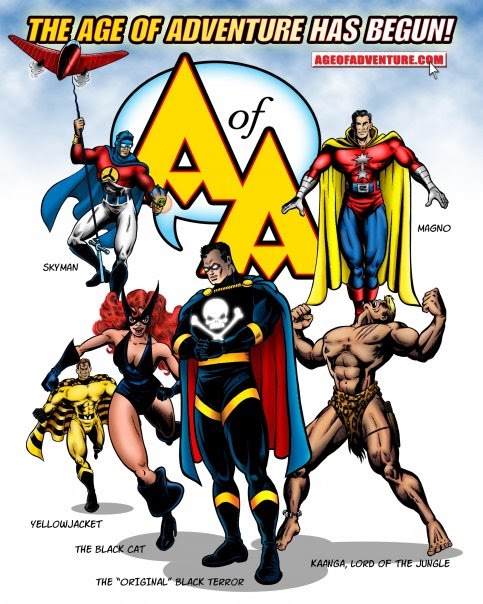
AP: You are also a publisher. Can you tell us about how you started Age of Adventure, what your company produces, and the mission and purpose of Age of Adventure?

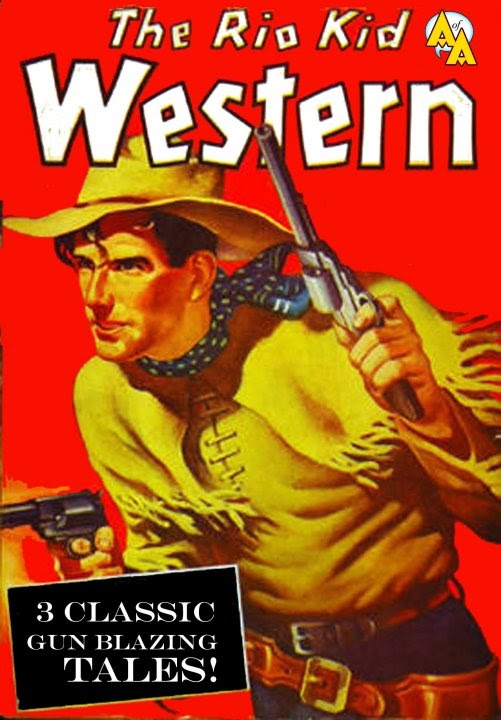
WS:  Age of Adventure (AofA for short) started out putting together collected editions of Public Domain Comic book material.  Basically it was stuff I wanted on my shelf in a nice format that didn’t cost too much.  Others seemed to agree and sales were good.  It quickly grew into what it is now.  We publish 3 ongoing magazines as well as the odd Pulp anthology, collection or novel.  You can check out our storefront at:  http://stores.lulu.com/goldenage1
We try to keep costs as low as possible so that more people can afford to enjoy them.  Our goal is simply to put out material that the fans want to read!

AP: Age of Adventure covers several sub genres within pulp, but two in particular have been prominent from you in the last year or so. What appeals to you about the western story and about war stories?

WS:  I don’t know if War stories are big from us, but I love a story that embraces adventure combined with brotherhood and often thats the core element of a good War story.  Our Westerns have been selling gangbusters!  I grew up watching Western movies and TV shows and have always been a big fan of John Wayne, Chuck Connors, Clint Eastwood, etc.  I feel that Western stories are so appealing due to the fact that its an American take on the classic Knight Errant.  Wandering hero, codes of honor, tin stars in place of armor and six guns instead of swords.  Plenty of damsels in distress too.  Whats not to love?  Every story is like re-visiting a Saturday morning of my childhood.

AP: You also are the organizer/creator of your very own convention? Can you tell us about that, what it’s called, its history, that sort of thing?

WS:  I run “Savage Con” once a year in St. Louis.  This will be the second year under that name, there were 3 prior which were known as the “LaPlata Doc Con” due to the fact that they were held in LaPlata, Mo.  The hometown of Doc Savage scribe Lester Dent.  It started as a simple gathering of Doc Savage friends and while we’ve kept our original crew of attendees its blossomed into something a bit bigger than it originally was.

AP: Doc Savage is definitely a well known character and has influenced many fans, writers, and artists? What goes into building a convention around a single character? Is there enough about Doc to warrant that much attention over a two or three day period?

WS:  Our get together is a day and a half and there is definitely enough Doc to fill that.  He’s the archtype for so many heroes today and has such a rich history and catalog of stories.  Doc fandom is very much a brotherhood all its own.  From buying, selling, and trading, to fanmade original swag, discussions and trivia.  One of our brotherhood, Matt Hiebert, put together a really wonderful “DOC”umentary even.

AP: What about this year’s Con? What’s the agenda for those who attend?

WS:  The typical Trading, Buying, Selling, and comradarie.  A silent auction for some original Doc Art, Trivia contests with prizes, and various pulpy films to be shown.  We may even have a book signing or two.  One of our regulars is Dr. Art Sippo who wrote “Sun Koh: Heir of Atlantis” released through AofA.  Art is one of the nicest and most knowledgeable guys you could ever meet.

AP: What are your long term plans for Savage Con?

WS:  I’m hoping to start attracting comic fans as well as pulp fans, and possibly expand some content that is still high adventure, but not nec. Doc-specific.  Just to add to the fun.AP: All right, now on to for what is probably for some the most interesting aspect currently of your relationship to pulp. You are a chef by trade. And now you own a restaurant. Can you describe the Raygun Café’ for us?
WS:  Absolutely!  Raygun Cafe’ was born in part out of my attempts to get some kind of Pulp Museum going.  Things didn’t work out in LaPlata to that end, though I and some other fans did get a nice, permanent Dent/Doc display established at the Library in his hometown.  Raygun is basically the pulp and comic version of a Hard Rock cafe’.  Pulp, comic, and Sci-Fi art and memorabilia, Serials, OTR, etc.  Thats the atmosphere and the food is second to none!  Italian beef, Gourmet Hotdogs, Panini’s, fresh, seasonal soups and stews and local micro brews and artisan beers.  A lot of positive buzz locally so far!

AP: Pulp is definitely a genre that is on the upswing, experiencing a renaissance. Is there a market for a pulp themed restaurant and if so, what market are you targeting?

WS:  We’re targeting not only fans who know the genre, but fans of adventure and nostalgia buffs as well.  I think the market for such an endeavor is ready to be tapped.  Who doesn’t love action and heroic imagery?  Who doesn’t love to eat!?  Its got a big eye appeal factor, its family friendly, and I plan to try and sneak a little pulp history lesson in here and there to help create a new generation of fans.

AP: Now, this is much more than a restaurant for you. You’ve been quoted as describing it as an educational experience as well. Would you mind elaborating on that?

WS:  The artwork, pulps, and comics on display naturally lend themselves to discussion and people asking questions.  I’m working up info-cards with pulp and creator history tidbits to display as well as just being available and encouraging questions and discussion on the decor and exhibits.  “Who is that guy?” will be something a person asks once and winds up answering for others later.

AP: Can you tell us what patrons can expect to be on the menu at the Raygun Café? Also, what artifacts/displays they might expect to see from the world and history of pulp?

WS:  Well, as I said before on the menu, we’ll have Italian Beef (Art Sippo will vouch for how good that is!) French Dips, Deli style sandwiches and sides, Various gourmet Hotdogs, Panini’s, fresh soups, stews, and chowders, and when weather permits, we have a grill out back for BBQ specials. Just don’t touch the art!!
As for displays we have original pulps and vintage comics, Pulp and Sci-Fi artwork enlarged to gigantic size, Retro space toys, and original genre related artwork from local artists (including some amazing stained glass).  I’ll be constantly rotating the actual pulps and comics that are displayed and will likely have “Gallery Talk” sessions when I do so.

AP: What are the future plans for the Raygun? In ten years, will there be one in every major city in America, if you have your way?

WS:  …gah!  One is enough stress right now!  I’m certainly not against franchising, but we need to get this one going strong first.  Right now the goal is to excite the masses and provide an income for my family!

AP: Let’s back up and talk about your writing a bit more? What particular process do you go through to create a character and write a story? Do you just sit and let the words flow from your fingers or do you follow a particular pattern?

WS:  I’m very much comic book inspired, I tend to think very visually and i’ve been told I write that way as well.  Someone once told me “Your stories are too comic book!”  They meant that as an insult, I took it as a compliment. I never outline anything to be honest.  Usually I’ll get an idea for a scene or a story and let it evolve in my head for a few days, after that I sit down and hammer it out.  Once I get going with a character they pretty much write themselves, I just provide a situation they have to deal with and they act accordingly.  I don’t obsess with daily wordcounts and such, that simply builds frustration.  If I have a story to tell I tell it.  If it takes me a day or a month to write it then thats what it takes.  I basically write stories I myself would like to read.

AP: What sort of stories and writers is Age of Adventure interested in?

WS:  Right now we’re taking open submissions for our Western Magazine (short stories).  We also look for good, solid action and adventure in any setting, from pulp era to contemporary.  I like working with writers I’m familiar with, but if you have a good story to tell, I’m happy to give it a shot.  I’ll be honest, being a publisher, even a small press one, you get your fill of big egos pretty quick.  Politeness and humility go a long way towards getting anything you want in this world!

AP: What’s in the future for Age of Adventure?

WS:  We have our ongoing Western Mag issue 3 of which is due out later this month, and a really fantastic anthology which will be hitting the stands by the 20th titled “Vampires Vs. Werewolves”.  Great cover art by Rob Moran on that one.  Thrilling Adventures is gearing up to return along with Super Heroic Tales (our other two magazines).  We have a collection of Barry Reese’s stories in a variety of pulpy genres titled “Dangerous Worlds”, and Art Sippo is busy working on Sun Koh 2…

AP: What about Wayne Skiver, the writer? Anything coming down the pike you want the public to know about?

WS:  Actually i’ve been hard at work scripting a comic series with some original characters.  Can’t say too much about that right now, but its going to be a lot of fun and I’m working with some really amazing like-minded cohorts.  The next issue of Comic Fan! from Main Enterprises has an article on the history of the Charlton Action Heroes from me as well.

AP: Wayne, it’s been awesome to spend some time with you. Anytime you want to push Age of Adventure, the restaurant, the convention, or what you’re writing, let us know!

WS:  Thank you, it was good to talk with you.  The pulp community is a close niche, its good to have a site to get a glimpse of whats going on in various aspects of all things pulp, print and non!
                                                                  _____________________

National Graphic Novel Writing Month, Day #6: Four-color, true grit, or somewhere in between?

By now, you should have an idea for a story, and you might even know who some of the characters are. Your next question: how are you going to present the story?

To quote the greatest criminal mastermind of our time: “Some people can read War And Peace and come away thinking it’s a simple adventure story.” How you present the story is very important.

Let’s say you were writing a Batman story… why not, everybody else has. What type of Batman story are you going to tell?

Remember, this is a character who’s a cheery Saturday morning cartoon on The Brave and the Bold but he’s also beating people to a pulp in The Dark Knight, a film that pushed the limits of PG-13. He’s a toy for toddlers, a sociopath in Frank Miller’s work, and sometimes just flipping weird in Grant Morrison books. And it all works.

But more on point, the tone of your story has to be considered. It’s easy to contemplate a noir Batman story, but you could just as easily write a science fiction Batman story. Or a comedy. Or a spy story. Or a fable. Or horror. Or musical comedy– okay, it’s tough to do musical comedy in comics, but it’s been done in other media.

And more importantly, you can tell the same sequence of events, but you can frame it in different ways. You can look at your buddy’s romantic troubles as tragic or hilarious– or both, if they’re like my friends.

This will also affect who your choice of artist will be. Granted, you may or may not have control of who will end up drawing your story, but you can write as if you are picking the artist. A Batman story drawn by Jack Kirby will feel much different than one drawn by Neal Adams, and that will feel different than a story drawn by Timothy Truman. But again, you can use that to your advantage. No one will expect a story drawn by, say, Gene Colan to be a laugh riot. And yet, there were a few funny Batman stories that he drew.

Tone is your secret weapon– people expect a comic book story to be told a certain way. Surprise them.

Remember: you can follow all the NaGraNoWriMo posts here!

INTERVIEW with KG McABEE, Pulp Author!!!


AP: Tell us a little about yourself and your pulp interests.

KGM: I can still remember my dad buying Batman comics and reading them to me, and my keen desire to learn to read them myself. One of my first loves was Jules Verne; I read 20,000 Leagues Under the Sea in 4th grade and my teacher kept asking me if I understood it. Well, certainly, though I admit I had to skip over some of the technical terms. Then I started on Andre Norton and Heinlein’s juveniles in 5th grade, and on to Robert E. Howard, H.P. Lovecraft, Talbot Mundy, Sax Rohmer, C. L. Moore, ERB…so many, many fascinating writers!

AP: How did you get your start as a pulp writer?

KGM: My tendency, when anyone says, “Can you write—”, I say, “Sure!” And since I’ve read so much pulp, it seemed a natural step to try writing some. When I was first starting to write professionally, I did some REH pastiches for Tom Johnson’s pulp magazines: Conan-ish, Solomon Kane-ish and Breckinridge Elkins-ish shorts. Tom liked my work and introduced me to Ron Fortier of Airship 27, who recently published the GIDEON CAIN, DEMON HUNTER anthology edited by Van Plexico, and Ron Hanna of Wild Cat Books, who publishes the STARTLING STORIES magazine where I’ve been lucky enough to have several shorts and novellas. Ron Fortier also got me involved with a Domino Lady anthology which ended up being released by Moonstone Books.

AP: There seem to be many different opinions about what can be defined as pulp. What do you look for in a pulp story as a writer and a reader?

KGM: I think pulp is by definition adventure-and-atmosphere heavy and strongly plot-driven, with character a close—or sometimes not so close—third. That said, I do consider character to be of prime importance, especially as a reader. If I don’t care about the characters, why would I want to read about them? That, I think, is part of the appeal of long-running pulp characters: Doc Savage, The Shadow and the rest. The reader gets a feeling, almost, of family; I know I would love to have a meal or go on vacation with Doc and his Fabulous Five, listen to Monk and Ham argue, marvel at Johnnie’s vocabulary. The adventures of these characters are great, but really, what does the reader remember? An exciting trek in a submarine or why Monk named his pet pig Habeas Corpus?

AP: Where can readers find information on your books?

KGM: My website, which needs updating desperately:
And the one with my collaborator, Cynthia D. Witherspoon—we write urban fantasy and steampunk as Cynthia Gael—

AP: What upcoming projects do you have coming up that you can tell us about at this time?

KGM: I’m working with my collaborator, Cindy Witherspoon, on the aforementioned urban fantasy series called THE BALEFIRE CHRONICLES. Book one, BALEFIRE AND MOONSTONE, is available from Gypsy Shadow Publishing and at Amazon. Book two in the series, BALEFIRE AND LODESTONE, is done and we’ve started on book three. Under the Balefire umbrella, we’re also doing a series of steampunk novellas; the first one, BALEFIRE AND BRASS, is complete and under consideration. I’m also finishing up a fantasy and hope to do more pulp soon.

AP: Do you have any shows, signings, or conventions coming up where your fans can meet you?

KGM: I’ll be a guest author at Pagan Pride Day in Clemson, SC on October 9. On November 2, I’m doing a NaNoWriMo kickoff in Woodruff, SC. I’m teaching creative writing classes in Asheville and Charlotte, NC, for

AP: And finally, what does K. G. McAbee do when she’s not writing?

KGM: Not writing? If I’m not writing, I’m thinking about writing. Seriously, though, I do try to spend as much time as I can writing, but I also read an enormous amount; I think it’s not only necessary for a writer but the most fun you can have. I also tutor English and algebra at two local community college branches, which is odd because I don’t have a degree in either; my degree, strangely enough, is in industrial electronics. But I’m with Heinlein; he said a human being should be able to do anything from diaper a baby to cook a meal to lead an army to colonize a planet; specialization is for insects. I’m definitely one of Heinlein’s Children. www.twwoa.org in November and December. And I’m giving a presentation called “Airships, Submersibles, Difference Engines and Steam Men: Reading, Researching and Writing Steampunk” at the Upstate Steampunk Extravaganza in Greenville, SC. www.cynthiagael.comhttp://kgmcabee.books.officelive.com

Crazy Sexy Geeks: Superhero Psychology 2 – Robin!

default37-7006389
Comic book historian Alan Kistler and the forensic psychiatrists of Broadcast Thought discuss the teenage heroes called "Robin." And how does Batman benefit from having an apprentice? With guest host Jen Jamula. All images are from DC Comics. Music is royalty free. Please support us.
Views:
8284
icn_star_full_11x11165-1960349 icn_star_full_11x11165-1960349 icn_star_full_11x11165-1960349 icn_star_full_11x11165-1960349 icn_star_full_11x11165-1960349
54
ratings
Time:
07:53
More in
Entertainment

ANNOUNCING THE FIRST EVER ALL PULP Pulp Artist Weekend!!! Lead off interview-Tamas Jakab!

That’s right, Pulpsters!  In a last minute inspired decision ALL PULP is now dedicating weekends (as long as material and artist types last anyway) to that often unsung pulp creator, the ARTIST.  Each weekend, ALL PULP will endeavor to post interviews, columns, news, etc. that focuses on the work of artists of all types in bringing pulp to life!   

With the short notice of this (sorry, ALL PULP just works that way sometimes), if you have any art you’d like to share, make sure you have permission of the artist and send it on for the first ever ALL PULP P.A.W. Gallery to debut ON SUNDAY.  This will occur every weekend and will include art submitted for the Gallery each week!

First up for ALL PULP’s P.A.W., an interview with Tamas Jakab, artist and co-creator on EL GORGO!!!

TAMAS JAKAB, Artist/Letterer/Colorist/Co-Creator on El Gorgo!

elgorgo2-8526129
AP: Who is Tamas Jakab?
TJ: Tamas Jakab is a person (presumably, though he may actually be a clone or a robot), who lives in Cleveland, Ohio with 2 cats, a dog and a girl. I had a brief career doing cover and design work for the late, great Frontier Publishing, as well as various freelance gigs. I am the co-creator, artist, letterer and colorist on EL GORGO! On the side I work a day job unrelated to comics.
AP: What are your artistic influences and aspirations?
TJ: From comics, Jack Kirby, because all superhero comics are Jack Kirby, whether they realize it or not. Also Grant Morrison, because he goes for the big, crazy ideas, and superhero comics work best when they’re big and crazy. Otherwise, the list could go on and on – Los Bros Hernandez, Darwyn Cooke, Steve Ditko, Mike Allred…
AP: What do your think your strengths as an artist are?
TJ: Certainly not inking. I think I’m barely adequate as an inker, which can be frustrating, because I really love the aesthetics of comic book inking. I do think I have a really good eye for color, design and typography though.
AP: What’s your dream project?
TJ: Currently, EL GORGO! I’m really not the type of person who just wants to draw BATMAN or SPIDER-MAN. I prefer working on original concepts where I’ve got a lot of creative freedom and can play with different styles and genres.
AP: How did you get involved with Mike McGee and end up co-creating EL GORGO! ?
TJ: I’ve known Mike since 1987. We first collaborated on an adaptation of one of his short stories for the FRONTIER PUBLISHING PRESENTS comic back in 2005, and we’d been trying to get a new project going for 2 years with little success. EL GORGO! was a happy accident that came from a proposal to do a throwaway story for a comics anthology. We pretty much had the basic character of El Gorgo worked out in about an hour. We quickly realized we had a really fun, high-concept character and kept at it after the anthology didn’t work out.
AP: Who is EL GORGO! ?
TJ: EL GORGO! is a super-intelligent luchador gorilla scientist who saves the world on several occasions, plays in the world’s greatest surf-rock band, Gorgo-A-Go-Go, and is an historical novelist on the side. He’s pretty much Reed Richards, Captain America, Indiana Jones and Doctor Who rolled into one.
AP: Where do you see EL GORGO! as a character and as a comic book going?
TJ: Optimally, EL GORGO! would be in the mind and heart of every living being on Earth. Right now we’re just getting issues out as we can, which isn’t as frequently as it should be, and I’d like to see us move away from print and entirely into digital publishing.
As a character, we’ve really just gotten started…
AP: What do you and Mike have planned for EL GORGO! ?
TJ: We have way more things planned out than we will probably ever get to. Currently we have the book plotted out to about issue 13 or so, which would run through the Secret Origin of El Gorgo. In between, there are still some major characters to introduce, but I can’t give spoilers. Should we ever get to it, we have a good idea what the last EL GORGO! story would be, and I know exactly what’s on the very last page.
In a perfect world, we’d find the time to go at least 40 issues, which seems to be the sweet spot for good comic runs.
AP: You did the cover for DILLON AND THE LEGEND OF THE GOLDEN BELL.  What was the concept for that cover?
It was based on a cover from DOC SAVAGE MAGAZINE in 1933, “The Red Skull” by Walter Baumhofer, which is featured in the great collection PULP ART. Given Dillon’s pulp roots, particularly Doc Savage, I figured I’d go right back to the source for inspiration.
TJ: How did you achieve that aged look that makes the cover look like an old paperback?
goldenbellwebcover-2041862
Additionally, on the EL GORGO! back covers, I used halftone patterns to simulate old-school color separation by hand. I love the fact that I can use expensive modern technology to simulate cheap printing methods that were replaced by better technology.
AP: What’s your method of working? 
TJ: I work 100% digitally these days. I reached a point where it made no difference if I worked on paper or on the computer, except it’s easier to fix mistakes on the computer. I work primarily in Adobe Photoshop and Adobe Illustrator, and I now use Manga Studio to draw and ink EL GORGO! The cover for DILLON AND THE LEGEND OF THE GOLDEN BELL was created in Corel Painter and then finished in Photoshop. 
ds-theredskull-4482712
AP:  What’s a typical Day In The Life of Tamas Jakab like?
TJ: Very hectic and yet unspectacular.
AP: Where should we go to see other examples of your work?
TJ: The covers for Frontier and some pre-EL GORGO art projects are still hosted on my old website, http://rednever.com. I’m no longer maintaining the site, and eventually the art projects will find a new home.
AP: Anything else we should know about you?
TJ: I haven’t forgotten about EL GORGO! issue #4! I have some other non-art projects I have to work on, but I’ll be back on it as soon as I can!

Spectacled 7 Author on Earth Station One Podcast!!!

Check it out at http://tinyurl.com/27uv44j

Earth Station One Episode 27 – I Think I’m A Clone Now, There’s always two of me just a hangin’ around.


This week on ESO, Mike, Dan and Mike are joined by comic book writer Bobby Nash to talk about his new trade paperback Yin Yang, and then we dive back into the world of Star Wars and talk about Episode II: Attack of the Clones. Also this week we try again at our new crew rant section “Crew Kudos“.


Join us for another fun filled podcast that we like to call Episode 27: I Think I’m A Clone Now, There’s always two of me just a hangin’ around.


Table of Contents
0:00:00 Intro / Welcome
0:02:26 Crew Kudos – Batman: The Cult / The Akinator / Superman – Batman: Apocalypse / Comic Book Prices
0:28:48 Bobby Nash Interview
0:53:32 Star Wars Episode II: Attack of the Clones
1:29:13 Show Close

INTERVIEW-TOM JOHNSON, Pulp Author/Creator/Historian!!

tom-1498807

AP: It’s easy to say that this is truly an honor and privilege for ALL PULP to have a chance to visit with you, Tom. Before we jump knee deep into you and pulp, can you share a bit of personal background with us?

TJ: It’s my pleasure, thanks for inviting me. I was born in a small farm and ranching town in Texas in July 1940. My dad was a cowboy, cook, and drunk, and good at all three. When I was seven, we moved to Wichita Falls (Texas), where I discovered comic books and Skid row theaters. Finding Batman changed my life. We also had a radio, and I listened to all the great dramas, including The Shadow. My dad wanted me to follow in his footsteps, but I had other plans. After High School, I joined the Army and became a military policeman. Upon retiring my wife, Ginger and I started ECHOES, a fan magazine for the pulp enthusiast, and published it for 22 years. I had a serious debilitating stroke in 2002, which slowed me down considerably, but I’m still fairly active. I have never regretted leaving the farm and ranch life behind!
 
AP: When the name ‘Tom Johnson’ comes up in terms of pulp, several titles are attached to you. Before we get into those, tell us how your obvious love affair with pulp started and how its maintained for so long?

TJ: I was an early reader, starting with the juvenile classics around 1950, then SF a few years later. By my teenage years I was reading Spillane and the tough guy P.I.s. While serving in France around 1963, my sergeant turned me on to Edgar Rice Burroughs, and then to Haggard and Howard. In 1964 I was sent to Turkey during the Cypress Crisis, and we were stuck on an Air Force base. It was here that I found Walter Gibson’s “Return of The Shadow”. When we returned to France, I discovered Doc Savage that same year, and have never looked back.
 
AP: You are referred to by many as a pulp historian? Is pulp history something the modern reader and/or writer needs to know? What about these characters and their creators is relevant to an audience today?

TJ: That’s a loaded question (G). I think the old characters are still relevant today, and I don’t see any need in drastically changing them, so I do believe the new writers should be familiar with the stories, and not just a “Bible” of the characters. But I also understand that we are looking at a new generation and market, and what us old timers liked may not be what the reader today wants. Still, I don’t believe the new writers should kill off main characters or change backgrounds to suit them, and I don’t think sex and language are necessary to tell a good story. Times were changing even in the early 1950s, when the hint of sex, and rougher language crept into the stories, but by then readers were expecting it. Perhaps if the pulps had continued, we would have seen even more changes in the later 1950s. Who knows?
 
AP: As a historian, what trends do you notice in the pulp genre that are occurring today that have ties to the heyday of pulps? Are there consistencies or is this just a revival of a genre loved by a few?

tomjohnson1-9748705

TJ: Unfortunately, we are still few in number. With the so-called pulp revival, we’re still struggling to get new converts. I have said in the past that this is a wonderful time for pulp fans to be alive. There is so much available now, considering the POD technology and Internet. And I love the small press, but until the major publishing houses get the pulp fever, I’m afraid we’re still targeting just a few.
 
AP: As a writer, you cover the gamut. Tell us about some of your favorite personal works.

TJ: Mike Avallone once said, “I’m proud of everything I’ve written.” I wish I could say that (lol). Really, though, I had fun with all of my stories. My current publishers, Matt Moring of Altus Press, and Barbara Custer of NTD are great people to work with. Surprisingly, though, I think that three of my favorite stories were actually collaborations. Debbie DeLorme and I coauthored “Hunter’s Moon”, K.G. McAbee and I coauthored “Shadowhawke”, and Teresa Drippe and I coauthored “Crimson Harvest”, all three were exciting tales, and the three young women were wonderful to work with.
 

tomjohnson-6322303

AP: Some writers find it difficult to cross genres, even in such a broad genre as pulp. Is it difficult for you to write one genre, then another, and what appeals to you about working in multiple genres?

TJ: Well, to be honest, Edgar Rice Burroughs influenced my writing the most. So my earliest attempt was the novel, “Jur: A Story of Pre-Dawn Earth”, which has been favorably compared to ERB’s Pellucidar series. I still try to emulate Burroughs’ style, and genre. On the other hand, my favorite characters are The Shadow and Batman, so I really want to write stories about similar heroes. When writing the old masked hero stories, I try to capture the feel of the original stories from the 1930s and ‘40s. That’s not always easy to do. I recently wrote a Man in Purple story for Altus Press’ upcoming Johnston McCulley volume, and I found McCulley extremely difficult to emulate. The Man in Purple was written in 1920, so that might have something to do with it (lol).
 
AP: You’ve made your own contribution to the ‘Lost Land/Primitive earth’ subgenre. Can you tell us a little about your ‘Jur’ novels?

TJ: Around 1965, my duties in France was Desk Sergeant for the MPs. On slow nights, when my units were out on patrol, and I was bored, I would write little plots and create characters, and put them through their paces. One of the plots I stumbled on was to become the Jur novels, but I didn’t do anything with it until a tour in the jungles of Vietnam. Upon returning to the states in 1970, I knew I had to write that story. I wrote the first two novels in long hand (pencil), and hired a professional typist to put it in manuscript format. Basically, my hero was an Army Green Beret just back from Vietnam. He was tough and trained in jungle survival and warfare. But he was angry at our involvement in Vietnam, and got out of the Army to wander around the world. He ends up in Africa where he hears about a young French girl who is missing. He goes in search of her, and falls through the same time portal as the girl, ending up in the Jurassic Period, where they eventually meet and survive the terror and dangers of the jungle. These two people were featured in the first two novels. But the first was never picked up. I still have all the Rejection Slips! I met James Reasoner and he looked at the story, and suggested we drop the Green Beret and begin the story, not in 1970, but just after the Stock Market Crash of ’29, and the main character isn’t all that tough and well-trained. We made the changes, and in 2002, a company named NBI accepted the first novel, and wanted to look at the second one. I had to quickly type the sequel while making the changes. I eventually wrote two more stories in the series. NBI went out of business after book #3. I self-published the fourth novel.
 
AP: You’ve written stories utilizing established characters. What about writing existing characters appeals to you and who are your favorite characters to work with?

TJ: That’s hard to say. I’m an odd ball, I think. I love The Black Bat and Phantom Detective for some reason, so have written a number of their adventures. But sometimes one of the other characters nag at me until I accept the challenge. I wrote a Doc Harker story a while back because I couldn’t get the plot out of my mind until I put it on paper. I aimed at 10,000 words, and it came out at 16,000 words! I recently wrote the sequel to PULP DETECTIVES, featuring ten different characters, several surprises that I can’t divulge yet. That is coming from Altus Press somewhere down the road. But I think it’s better than the first PULP DETECTIVES.
 

tomjohnson2-5804498

AP: You’ve also got original pulp hero creations that you’ve written. Can you share some of them with us and talk about the process of creating original characters?

TJ: Years ago while watching the TV series, The Equalizer, a Christmas episode aired about a little boy with AIDS. Some local rednecks were trying to run them out of the neighborhood. The boy calls The Equalizer for help. That episode hit me hard. I wanted to create a character that would have a child to protect in each story. Thus was born The Masked Avenger, a Phantom Detective type character in the 1930s. The Black Ghost is a contemporary hero, but in the mold of The Shadow and Batman. Both The Masked Avenger and The Black Ghost battle the crooks with blazing automatics, and there is plenty of action to keep the stories moving. There are a few other characters.
 
AP: Pulp is on an upswing, according to many in the field. How do you think the current crop of writers and artists can keep this ‘renaissance’ going instead of just fading away as it has in the past?

TJ: If I knew the answer to that, I would shout it to everyone who would listen. I think the writers and artists are doing their best to do exactly what you’re asking, but as I mentioned earlier, until the major publishing houses give us a hand, it’s going to take a while. All of the small press publishers are striving to achieve that goal, but I don’t know if we’re reaching everyone the big guys could. God Bless all of us in this effort, and I hope that pulps never fade away.
 
AP: You have an aspect to your life that a lot of pulp writers, this one included, wish we had. Your wife is not only a supporter, but an active participant in the pulp genre as well. Can you tell us about how it is working with Ginger and how you came to be lucky enough to find someone as into Pulp as you are?

tomjohnson3-1408805

TJ: Ginger was also a fan of Doc Savage. When Bantam was releasing Doc’s every month, we would hit the stores looking for the latest one. Ginger always got to read Doc first. Whenever I went overseas, she would pick up paperbacks for me and send them over, because in a lot of places I was at, we seldom saw a book! Remember I mentioned Turkey earlier, being a bunch of Army grunts on an Air Force Base meant we didn’t get anything passed down to us. I could tell some stories about that, but I won’t. (lol) But Ginger has always shared my interest in the pulps.
 
AP: So, what’s in the future for Tom Johnson and pulp?

TJ: Well, I retired last December, but I keep getting these plots in my head. I still plan on taking some time off. But Debbie DeLorme has been talking to me about another collaboration, so who knows. Maybe one more Black Ghost story. Barbara Custer also wants to put out a couple SF anthologies with a compilation of our stories. Maybe this year, maybe next year.

AP: Again, can’t say enough how great it’s been to talk to you today, Tom!

TJ: Thank you for inviting me, Tommy!

_____________________________________ 

Sci-Fi Fan Favorite Summer Glau is Supergirl in ‘Superman/Batman: Apocalypse’

Summer Glau knows her audience.

Whether as River Tam in Joss Whedon’s cult classic series and follow-up film, Firefly and Serenity, or as the indestructible android-from-the-future Cameron in Terminator: The Sarah Connor Chronicles, Glau has cornered the market on playing attractive, demure young females with the controlled homicidal power to destroy an opposing legion of trained warriors.

So it was only natural that as her first-ever animated voiceover role, Glau would fit neatly into the role of an uber-powered Kryptonian who falls under the spell of one of Superman’s greatest foes. Glau finds the perfect mix of youthful curiosity, teen angst and alien-turned-Earth-girl aggression as the voice of Kara, cousin of Superman (and ultimately destined to become Supergirl) in Superman/Batman: Apocalypse, the ninth entry in the popular, ongoing series of DC Universe Animated Original PG-13 Movies out this week from Warner Home Video.

Based on the DC Comics series/graphic novel Superman/Batman: Supergirl by Jeph Loeb, Michael Turner and Peter Steigerwald, Superman/Batman: Apocalypse is produced by animation legend Bruce Timm and directed by Lauren Montgomery (Justice League: Crisis on Two Earths) from a script by Academy Award-nominated screenwriter Tab Murphy (Gorillas in the Mist). Produced by Warner Premiere, DC Entertainment and Warner Bros. Animation, Superman/Batman: Apocalypse is now available as a Blu-ray Combo Pack, Special Edition DVD, On Demand and for Download.

Glau’s career has been populated with frequent visits to the fanboy realm, adding regular roles on The 4400 and Dollhouse to her featured gigs on Firefly/Serenity and Terminator: The Sarah Connor Chronicles. The professionally trained ballerina had a seven-episode run on The Unit, and will appear in the upcoming NBC series, The Cape, as well as in the film. Knights of Badassdom.

Following her recording session, Glau freely discussed a number of subjects – from the acting strengths of the Whedon alumni association to her consistent on-set nerves to a strong desire to land more adult roles. Here’s how that conversation went …

QUESTION: Was it easy to find a way to relate to Kara?

SUMMER GLAU:
Kara was a really comfortable fit for me because she’s sort of a girl coming into her own.  A girl becoming a woman and finding out who she is, and so I felt like there were moments when it reminded me of River because she is so powerful, but also young and naïve and a little bit lost. She has this underlying strength that comes from out of nowhere. (more…)