Tagged: Michael Davis

Mindy Newell: It All Gives Me A Headache – Part Three

newell-art-130916-150x142-7901607“And in each universe, there’s a copy of you witnessing one or the other outcome, thinking – incorrectly – that your reality is the only reality.”

– Brian Green, The Hidden Reality: Parallel Universes and the Deep Laws of the Cosmos.

•     •     •     •     •

Who are you?

Are you sure?

•     •     •     •     •

Are you Buffy Summers, the Slayer, the chosen one of her generation who stands alone against the vampires, monsters, and demons who threaten the world? Or are you Buffy Summers, a schizophrenic patient in a psychiatric hospital battling the unleashed horrors of your own id?

Doctor: Do you know where you are?


Buffy: Sunnydale.


Doctor: No. None of that’s real. None of it. You’re in a mental institution. You’ve been with us now for six years.

Spike: Put a little ice on the back of her neck. She likes that.


Buffy: Some kind of gross, waxy demon-thing poked me.


Xander: And when you say “poke”…?


Buffy: In the arm!


Buffy: They told me that I was sick, I guess crazy, and that Sunnydale and all of this — none of it was real.


Xander: Oh, come on. That’s ridiculous. What? You think this isn’t real just because of all the vampires, and demons, and ex-vengeance demons, and the sister that used to be a big ball of universe-destroying energy…?


Willow: Okay, all in favor of research? Motion passed.


Doctor: In her mind, she’s the central figure in a fantastic world beyond imagination. She’s surrounded herself with friends, most with their own superpowers.


Doctor: Together they face grand, overblown conflicts against an assortment of monsters, both imaginary and rooted in actual myth.


Doctor: Buffy, you used to create these grand villains to battle against. And now what is it? Just ordinary students you went to high school with. No gods or monsters, just three pathetic little men… who like playing with toys.


“Normal Again”

Buffy The Vampire Slayer

Season Six, Episode 17

•     •     •     •     •

Who are you?

Are you sure?

•     •     •     •     •

Are you Buddy Baker, married to Ellen Frazier, father to Cliff and Maxine, and living in San Diego? Or are you a character in a comic book called Animal Man, which was written by Grant Morrison and published by DC Comics?

newell-art-130916-21-146x225-9010309


(to read this page at full size, double-click on the image)

•     •     •     •     •

Who are you?

Are you sure?

To be continued…

At least, in this universe!

(citations copyrighted by their respective owners)

TUESDAY MORNING: Emily S. Whitten

TUESDAY AFTERNOON: Michael Davis


Mindy Newell: The Grandfather Paradox Gives Me A Headache

Newell Art 130826Is time travel possible? Can history be changed?

Imagine you had a time machine and went back into the past. While there you meet and accidentally kill your grandfather before he got married and had kids, one of them your own parent. Then you automatically wipe out your own existence, right? But if you have never existed, then how do you go back in time and kill Grandpa?

This is called The Grandfather Paradox, and it is probably the most famous example of what is termed a temporal paradox. This scenario was first described by science fiction writer Rene Barjavel in his 1943 book, Le Voyager Imprudent – translated, The Imprudent Traveler. (I didn’t know that, either. I looked it up.)

The Grandfather Paradox is not exclusive to killing Gramps. The entire plotline of Back To Future depends on Marty, um, “pre”-uniting his parents after he inadvertently interfered with his father, George McFly, being the one nursed by his mom (thus kindling their romance) after dad fell out of the tree into the path of a passing car. Because George did not marry Lorraine Baines, Marty cannot exist, and we see this principle at work as his first-born brother and then second-born sister disappear from a family photograph, until, at the prom (and the penultimate scene), Marty starts to fade away as he plays guitar. But just in time, George (who has saved Lorraine from being mauled – raped? – by Biff Tannen, the town bully) dances with her – they kiss, and suddenly Marty springs back to life and his brother and sister reappear in the photograph.

Marty inadvertently changes history in other ways, because in his efforts to bring George and Lorraine together, he has given his father new confidence in himself. When Marty returns to 1985, he discovers that his sad sack family are now examples of the American success story. George is no longer a stumbling failure, but a successful science fiction writer. Lorraine is no longer a slovenly, overweight, complaining, straight-laced mom, and they are a happy, openly loving couple. His brother and sister are happy, too, and Marty discovers his parents have bought him his long-dreamed of truck.

Is time travel possible? Can history be changed?

Another example of the Grandfather Paradox is Star Trek’s “The City On The Edge Of Forever.” Written by Harlan Ellison, and winner of the 1968 Hugo award for Best Dramatic Presentation, City is the story of Jim Kirk and Edith Keeler, a social worker in Depression-era New York City.

It begins with the Enterprise investigating “disturbances in time” emanating from an unknown planet. Dr. Leonard “Bones” McCoy, sick and paranoid from an accidental overdose of cordrazine, transports down to the planet, and a landing party follows him, led by Kirk and Spock. While searching for Bones, the team discovers the Guardian of Forever, a self-aware portal into the time stream. Still delusional, Bones jumps into the portal. Uhura tells Kirk that she was talking to the Enterprise, and now, suddenly, there is nothing, not even static. The Guardian tells them that the past has changed and the Enterprise, indeed the entire Federation, no longer exists. The landing party is stranded and alone in a universe that is no longer theirs.

Kirk and Spock determine that McCoy somehow changed history, and they realize they must follow Bones and stop him from doing whatever it is he did that changed history.

The portal lands them, as I said, in a New York City circa 1933. Kirk and Spock meet Edith Keeler, who runs a soup kitchen for the down-and-out. While Spock puts together a rudimentary tricorder (“I am endeavoring, ma’am, to construct a mnemonic memory circuit using stone knives and bear skins.”), Jim and Edith fall in love. And meanwhile, unknown to both men, Bones is being nursed back to health in Edith’s soup kitchen.

Spock discovers that Edith is a focal point in time. His machine shows two possible futures for her. Either Edith, a determined pacifist, leads a movement that delays America’s entry into World War II, which allows the Nazis time to perfect the atom bomb and win the war, or she dies in 1933 in a car accident. Kirk realizes that Edith Keeler, the woman he loves, must die.

Jim and Edith are on their way to a movie – “A Clark Gable movie. Don’t you know? You know, Dr. McCoy said…” – Jim tells Edith to “stay right there” and runs back across the street to the mission, calling for Spock. Spock comes out, and so does Bones. Edith, curious and watching this reunion, starts to cross the street; her eyes on the three men, she doesn’t see the truck. Kirk instinctively moves, but Spock stops him, and instead of saving Edith, Kirk restrains McCoy from acting as well. Edith is killed. “Do you know what you just did?” Bones says in disbelief. Spock answers for Kirk. “He knows, Doctor. He knows.

With Edith’s death, history is back on track, and the three men are returned to the Guardian’s planet. Uhura tells them that the Enterprise is there and awaiting instructions.

“Let’s get the hell out of here.”

Is time travel possible? Can history be changed?

The Novikov Self-Consistency Principle, theorized by Russian physicist Igor Dmitriyevich Novikov and American theoretical physicist Kip S. Thorne’s work on wormholes and other astronomical data – can the laws of physics actually permit space and time to be “multiply connected,” as Thorne put it, so that time travel through machines or via wormholes is actually possible? – both rely on the same hypothesis, i.e.,

there is no danger of temporal paradoxes because anything that a time traveler does in the past is (was?) an established and predetermined part of history.

In “Assignment: Earth,” a second season episode of Star Trek: TOS, Kirk and Spock discover that the Enterprise and its crew were actually part of the events of 1968 which led to the failed launch of a nuclear warhead platform into orbit by the United States. If they hadn’t travelled back in time, if they hadn’t interfered, then history (from the 23rd century perspective) would have been changed. But history couldn’t be changed, according to the Novikov Self-Consistency Principle and Thorne’s hypothesis; the Enterprise’s presence was an established and predetermined historical fact.

Can history be changed? Is time travel possible?

In 1937, physicist Willen Jacob Van Strickum proposed an idea he called the “Closed Timelike Curve.” He theorized that if time is linear, you should be able to fold it in on itself, making time travel possible between any points touching each other.

This was the basis of Quantum Leap, although Dr. Sam Beckett, the time traveler in the series, used the term “string theory.”

From the episode “Future Boy”:

Moe: Time is like a piece of string. One end of the string is birth, the other is death. If you can put them together, then your life is a loop.

Al: Hey! Sam, that’s your theory!

Moe: If I can travel fast enough along the loop, I will eventually end up back at the beginning of my life.

Al: He – He’s got it!

Sam: Well, let me ask you what would happen if you would ball the string, right? And then each day of your life would touch another day. And then, you could travel from one place on the string to another, thus enabling you to move back and forth within your own lifetime. Maybe.

Moe: That’s it! That’s it! Then I could actually…

Sam: Quantum leap.

So, according to Quantum Leap, you can time travel, at least within your own lifetime.

But can history be changed?

In Quantum Leap, the only way that Sam Beckett could move on and try to find his way home was to “put right what once went wrong.” Which of course he did. So Sam was changing history.

Or was he simply creating alternate histories?

Alternate histories that led to whole new universes.

Parallel universes.

Parallel universes within the multiverse.

To Be Continued…

TUESDAY MORNING: Emily S. Whitten

TUESDAY AFTERNOON: Michael Davis


Mindy Newell: Family, A Love Story

newell-art-130805-6992951I must apologize for not being here last week. We had a family emergency, and the weekend was not fun.

No, not my dad. My mom. She was in the hospital.

I’ve talked about my dad here, but have rarely mentioned my mom.

She comes from a large family. Eleven kids. All of them, the girls as well as the boys, were raised to be independent, to be able to stand on their own two feet. My mom became a nurse, and down through the years, like Cherry Ames, she has worked in many areas of the field.

Laura Newell, Army Nurse. Laura Newell, Labor and Delivery Nurse. Laura Newell, Dialysis Nurse. Laura Newell, School Nurse. Laura Newell, Camp Nurse. Laura Newell, Public Health Nurse. Laura Newell, Emergency Room Nurse.

I thought a lot about my mom this past week. A professional woman before that was unremarkable. Able to sustain a marriage now 65 years in the making while raising two kids and continuing to work before there was daycare and flex-hours. Being in love, married to a man who was as proud of ability to help others heal as he was of her looks and housekeeping skills and never minded if she had to work an extra shift or stay overtime at the hospital? How had she done it? Where did she learn to how to do it?

And then I thought of my grandmother.

It was during the second wave of the East European Jewish immigration (which lasted from 1890 to 1924) that my grandmother, Anna Pecker, with her two young children – my Aunt Ida and my Uncle Phillip – crossed the ocean to America sometime in the early 1900’s. She was from a shtetl (Yiddish for “small town or village”) near Vilna, a city always known for its culture and book-learning, and which was sometimes part of Poland and sometimes part of Russia and is now a major city of Lithuania.

The thing is, no one knows what happened to her first husband. We don’t even know his name.

There are two theories. The first is that, like many young men of the times, he was conscripted into either the Polish or Russian Army and never returned. Her brother advised her by letter to come to America, saying that he could pay the steerage passage.

The second, and this is what makes it such an intriguing story, is that her husband was a miserable lout, always drunk, and always beating her and threatening the children. She hid her brother’s letters from the brute of a husband, as well as secreting money from him, as she saved for the journey from Vilna to Hamburg, Germany, where the ship would be docked. And then one day, young Anna had enough. She waited until her husband was asleep (or in a drunken stupor, or not home), took her kids, the money she had squirreled away, and left.

They mostly traveled by foot, saving money, and Anna would hire herself out as a maid or a cook to earn more, hiding the kids in a field or a forest. Supposedly they only travelled at night because it was safer, especially for a Jewess with two young children.  I don’t know how long it took, but it must have taken weeks, if not months, to get to Hamburg. Either she wrote her brother and sent it from one of her stops along the way, or, reaching the German port, she wrote her brother to wire her the passage money. (No one is sure about that.) At any rate, she paid for and received booking on a steamer to New York.

When they finally reached America and Ellis Island, my Aunt Ida, who was about five, was almost turned back because the immigration doctors said she had tuberculosis. But my grandmother refused to allow that, and my grandmother’s brother, who was waiting for them, must have greased a lot of palms. Ida was allowed to stay, although she had to be in quarantine for about three months. Think little Vito Corleone in Godfather II.

Anna and her children lived with her brother and his family in Bayonne, New Jersey, which had a large and thriving Jewish community. Jacob Yontef, a tall, handsome widower with seven children, and considered a “hot catch” by widows or mothers with marriage-age daughters, saw Anna at a dance, and fell instantly head-over-heels in love. I mean, he only had eyes for her, as the song says.

But Anna wasn’t interested. She literally scoffed at him, or so the story goes.

Was it because Jacob already had seven children? Of course, back then large families were the norm, but still, I think any woman would hesitate inheriting such a large brood. Unless her name is Carol Brady. Or…

Was it because she was still legally married? Was she worried that her husband would track her down? The mind boggles at the possibilities.

But Jacob never gave up.

Finally, at least three years later, though some in my family say it was more, Jacob won his woman.

And Anna Pecker became Anna Yontef.

And into this family was born my mother, Loretta Yontef, called Laura by everyone. Three years later, another girl, Anita, who would almost immediately be rechristened Augie – though that’s a tale for another time – was born.

Eleven kids.

And it wasn’t until I was 19, after my grandmother’s passing, that not only did I hear this story for the first time while we sat shiva (a period of mourning) but also learned that only my mom and my Aunt Augie shared parents.

Now my mom is 87, the matriarch of the family, the last surviving member of a true Yiddisher mischpacha (“family” in English, pronounced mish-PA-cha, the cha as in Chanukah – a sound that is like clearing your throat.)

Last month she fell, but thankfully did not break her hip. Still, for the last four weeks she has been in a great deal of pain and she was finding it hard to walk. Then last Friday I got a call. My mother was in the ER. There was a reason for her constant pain of the last month. No, she hadn’t broken her hip. (Thank God, for that would have been a horrible nightmare.) But the fall had caused a linear fracture of her lower pelvis, and of course walking around for the last four weeks had exacerbated it.

There really isn’t anything to do for a fractured pelvis (dependent on the severity, of course) but to rest it and allow it to heal, which means bed rest and wheelchair, with appropriate physical therapy.

So now my mom is in the same rehab/nursing home facility as my dad. We tried to get them into the same room, but weren’t able to, which, in fact, is a blessing in disguise, because knowing my dad, he would most certainly get up in the middle of the night to check on her and considering his fragile state – he is confined to a wheelchair these days and his cognitive state is not good, to say the least – well, I don’t even want to go there in terms of what that could lead to…But my mom is three doors down, and they spend their days together. I tease them about “wheelchair races.”

Yesterday, after a wonderful day partying and celebrating my niece Isabel’s 13th birthday, we brought my parents back to the nursing home/rehab center. They were both exhausted. The nurses said they would put them to bed for us.

But before they were wheeled off to their separate bedrooms (something that is hard for me to watch), they leaned towards each other, and kissed each other good night.

That’s 65 years of marriage.

That’s mishpacha.

That’s love.

TUESDAY MORNING: Emily S. Whitten

TUESDAY AFTERNOON: Michael Davis


Mindy Newell: Duck And Cover

newell-art-130610-6254247The bullshit never stops.

What is it about some men? Did Mommy keep obsessive charts about their every urination and bowel movement during toilet training, marking down the time and size and color and form? Or did Mommy skip the toilet training altogether and they went to kindergarten still wearing diapers? Did Daddy take little Tommy into the shower and soap the penis just a little too much? Was Uncle Ernie just a little too friendly? Did Great-aunt Myrtle catch little Hank masturbating in the bathroom while drooling over the Playmate of the Month?

What is it about some men who feel the need to piss and shit on any woman who dares to display talent, smarts, ability, and imagination?

Why do they do this?

Last week, here at ComixMix, Sara Raasch wrote about the latest attack on a woman who works in comics. This woman dares to display talent, smarts, ability, and imagination. Her name is Kelly Sue DeConnick and she is the writer of Captain Marvel, Avengers Assemble, Ghost, Sif, Captain America and the Secret Avengers, just to mention a few. She was attacked on Tom Brevooort’s Tumblr site, New Brevoort Formspring in a statement by Anonymous.” His thesis is that Kelly only got to write for Marvel and Dark Horse because she is married to the guy who writes Fantastic Four and Hawkeye. (Kelly’s response is on her own Tumblr site, Digital Baubles. Neil Gaiman also posted it on his Tumblr site, and several others did so, as well.)

The women in this industry respond to this crap in several ways – laughter, anger, ignoring the attack, blogging about it, writing columns about it, and sometimes taking the pusillanimous putz head-on (even notifying the police, in one case), depending on their mood and general disposition.

I got hit with this stuff, too, back in the day when I was writing in the industry. Someone accused me of getting assignments by “strutting the hallways in fish-net stockings and fuck-me pumps.” I was once told by someone at Marvel that, when I started working there as an assistant editor, it was assumed by most that I had been, uh, “especially nice” to Tom DeFalco, who was then Marvel’s editor-in chief.

I started working at DC in 1983 – thirty years ago!!!!

I was hired by Marvel in 1990 – 23 years ago!!!!!

You’d think by now, 50 years since Betty Friedan’s The Feminine Mystique was published, that the guano would have stopped falling from the sky onto our heads.

You’d think, right?

Wednesday, May 29, 2013. The Fox Business channel. Lou Dobbs Tonight.

Erick Erickson of www.Redstate.com appears along with FOX newsman Juan Williams to discuss a just-released Pew Study that found that mothers are now the primary breadwinners in 40% of American households. Lou Dobbs finds this “troubling.” Juan Williams thinks “something is going terribly wrong in American society.” And Erickson says:

I’m so used to liberals telling conservatives that they’re anti-science. But liberals who defend this and say it is not a bad thing are very anti-science. When you look at biology – when you look at the natural world – the roles of a male and a female in society and in other animals, the male typically is the dominant role. The female, it’s not antithesis, or it’s not competing, it’s a complementary role. We as people in a smart society have lost the ability to have complementary relationships in nuclear families, and it is tearing us apart. Having mom as primary bread winner is bad for kids and bad for marriage.”

And the shit just keeps on coming.

TUESDAY MORNING: Emily S. Whitten

TUESDAY AFTERNOON: Michael Davis


Emily S. Whitten: It’s All About Me! …And You!

whitten-art-130528-1111783You guys! You guys! Hey you guuuuuyyyyysssss!!! …Otherwise known as “wonderful ComicMix readers.” Guess what? Go on now, guess! Naaaaah, you’ll never get it. So here it is:

I am one year old!!

Well. If by “I” I mean “this column,” and if by “one” I actually mean “one year and a few weeks.” But still: can you believe it? I’ve been writing this here li’l column for over a year now. That’s fifty-seven columns to date! Holy cannoli! (Aaaaand now I want a cannoli. Great.)

Anywho, I meant to post this column on my Actual ComicMix One Year Anniversary, but you know how it is: you’ve got interviews with awesome people like Phil LaMarr and Billy West and Nick Galifianakis to post, and film festivals and documentary screenings to write about…and those are way more exciting.

However! On this, my one-ish year anniversary, I want to send a big thank you out to anyone who reads my columns, shares them with friends, comments on them, or discusses them with me. I get a lot of joy out of writing these columns, whether they are the ones where I’m ruminating on the vagaries of pop cultularity; or the ones where I get to talk to extraordinarily talented people or review excellent art; or the ones where my mind runs whimsically through a field populated by ridiculous stuff like superheroes celebrating the holidays together and antisocial vigilantes answering dating advice questions. And although part of that joy comes from my passion for the subject and for writing in and of itself, a big part of it also comes from the experience of sharing my thoughts and knowing my writing is engaging others in thought or discussion, or providing a bit of enjoyment (I hope!).

I’m always interested in whether what I’m writing resonates with readers, and in writing on topics that others want to read about. Therefore, even though technically this column is about me and my one year of writing around here, what’s it’s really about is you, my readers! So that I can write more things you want to read, I’d really like to know more about you: like how you first found my column; what you’ve read; what you’ve most enjoyed reading; what you didn’t care for, and what you want to see more of. To help me with this, you can answer the quick survey below!

But before we do that, here is a brief reminder of some of the sorts of things I’ve written (And all fifty-seven columns can be found here):

So now that you’ve had a little reminder of what I write, on to the survey!

If you have any further feedback, please feel free to leave it in the comments!

Thank you for taking the time to help me write more things that you want to read; and until next time, Servo Lectio!

TUESDAY AFTERNOON: Michael Davis

WEDNESDAY MORNING: Mike Gold


Mindy Newell: Live Fast… Die Never!

Newell Art 130513Plenty of individual panels have been freeze-framed in my head all afternoon, but none of them have led to any kind of sequential storytelling. This is the worst part of being a writer with a weekly column – watching the hands on the clock inexorably winding down to zero hour, the time by which I need to get the thing e-mailed to Mike and Glenn.

You never know where ideas come from. My column Baby’s First Fooprints came about from a little joke I made at Alix’s sonogram; today I was listening to the soundtrack of Angel and I realized that, while I’ve talked a lot about the intrepid Slayer, I’ve hardly ever mentioned it’s a spin-off; in fact, few people ever talk about it, which in its own way was just as riveting as its parent show. Angel continued the story of Buffy Summer’s vampire lover, played by David Boreanaze, who left Sunnydale at the end of season 3 of Buffy because he realized that he and the Slayer had no future. Her path was one of growth and exploration, and his was of acknowledging the past and seeking redemption for its sins.

It was a dark, gritty, film-noir type of show, with its main character struggling for atonement from his evil past. The first episode opened in a bar, and the first time we see Angel he is apparently drunk, which, not too subtly, set the tone of the series – just as the recovering alcoholic is always just one drink away from losing his or her life to the bottle, Angel will forever be just “one drink away” from losing his soul and become Angelus again. Even the supporting characters are struggling for atonement from their past sins – Doyle is a half-demon carrying a secret burden; Wesley is the failed Watcher (and, we learn later, the son of an emotionally abusing father) who must prove to himself that he has something to offer to the world; and Cordelia must expiate the sins of her selfish and cruel high school persona and become a mature and caring woman.

With the introduction of the law firm Wolfram & Hart and the attorneys Lindsey McDonald and Lilah Morgan, the induction of the innocent Winifred “Fred” Burkel and the street-smart Charles Gunn as part of the “We Help The Helpless” team, Angel’s themes became more and more about trust and deceit, hate and love, innocence and guilt, and the duplicity of good and evil. Finally, the show, I think, became the story of the necessity of sacrifice for the greater good, with the ultimate sacrifice being Angel’s renunciation of his promised return to humanity (the Shanshu Prophecy) in the penultimate episode.

A lot of people I know who were major fans of Buffy didn’t like Angel, and rarely watched it, if ever. They said it was too dark for them, too morbid. But I think the shows were bookends – if Buffy was about the empowerment of the dumb blonde in the dark alley attacked by a monster, then Angel was about the monster who wanted to stop living in that dark alley and let the girl escape. If Buffy was about telling women to step out of the shadows and embrace themselves, then Angel was about telling us, all of us, men and women, to use the shadows in our lives to makes us stronger.

TUESDAY MORNING: Emily S. Whitten

TUESDAY AFTERNOON: Michael Davis


Mindy Newells’s Wish List

22570-6753211How many books and DVDs do you have on your Amazon wish list? How often do you remember to look at it? I always forget to check it, but I took a look at it today, and there are 100 items.

No, I am not soliciting here. My birthday isn’t for another six months, Chanukah and Christmas are too far off to think about, and I’m not your mother, so forget about Mother’s Day, which is this Sunday, btw – although there is Alix, whom I always alert to her mom’s new column. Big Hint, Alix!

I do have to delete some of the books and DVDs; I’ve ordered them without looking at my wish list because, well, I forget to check the damn thing, but there’s still a lot there. The oldest item was added on June 11, 2006; it’s Star Trek: The Next Generation – The Complete Third Season (DVD, not Blu-Ray. I don’t have a Blu-Ray player.) I have no idea why I’ve never ordered this, why it’s languished at the bottom – maybe because I watch BBC America’s repeats of TNG on Saturday late afternoons (which lead in to Doctor Who) – since that season of TNG, as Bob Greenberger so excellently reviewed on ComicMix, was the season where the show really found its legs, airing such classics as Sarak (a Vulcan disease comparable to Alzheimer’s is destroying Sarak’s mind), Yesterday’s Enterprise (in an alternate timeline, the Federation is losing a war with the Klingons and Tasha Yar is still alive), Sins of the Father (Worf accepts disgrace and discommendation to prevent a Klingon civil war – the start of an outstanding seasons-long exploration of Klingon culture that carried over to Deep Space Nine – and save the Empire), and of course the season finale, Best of Both Worlds: Part I (“Mr. Worf….fire!”) Also of note, at least to me, are Who Watches the Watchers, (a pre-warp, pre-industrial civilization discovers they are being watched by Federation anthropologists), The Enemy (Geordi and a Romulan are marooned on a harsh planet and must work together to survive), The Offspring (Data creates an android daughter), and Deja Q (Q becomes mortal and is still a pain in the ass).

Apparently I was busy browsing on June 11, 2006. I also added Fagin the Jew by Will Eisner. I know I picked this one because of my dual love for Eisner and for Charles Dickens’s Oliver Twist. According to Amazon’s description, Eisner first envisioned the book as an introduction to a graphic adaption of Twist, but “as he learned more about the history of Dickens-era Jewish life in London, Eisner uncovered intriguing material that led him to create this new work. In the course of his research, Eisner came to believe that Dickens had not intended to defame Jews in his famous depiction. By referring to Fagin as “the Jew” throughout the book, however, he had perpetuated the common prejudice; his fictional creation imbedded itself in the public’s imagination as the classic profile of a Jew. In his award-winning style, Eisner recasts the notorious villain as a complex and troubled antihero and gives him the opportunity to tell his tale in his own words.

On that same day I also added Drums Along the Mohawk, starring Henry Fonda and Claudette Colbert (and directed by one of my all-time favorite directors, John Ford), When Worlds Collide, based on the book by Philip Wylie and Edwin Balmer, which I read years ago in my Introduction To Science Fiction class at Quinnipiac back when it was just a college and not a university – and talking about it now makes me want to reread it, so I’m going to add the book to my wish list, and Elizabeth I: The Virgin Queen, a 2005 Masterpiece Theatre mini-series, because of my passion for all things Tudor ( and yes, I already have The Tudors boxed set).

Moving forward, I kept up with my Tudor passion in 2011, adding a shitload of novels and non-fiction about that dynasty, including The King’s Pleasure, a novel about Katherine of Aragon (Henry’s first wife, she whom he dumped for Anne Boleyn) by the late and great British author Norah Lofts, and two histories by another Brit, famed historian and author Allison Weir: The Lady in the Tower: The Fall of Anne Boleyn and Henry VII: The King and His Court. I also listed Confessions of a Prairie Bitch: How I Survived Nellie Oleson and Learned to Love Being Hated by Alison Armgrin, Prairie Tales: A Memoir by Melissa Gilbert, and The Way I See It: A Look Back at My Life on Little House by Melissa Sue Anderson just because I always loved Little House on the Prairie. C’mon, who didn’t?

In November 2011 I added William Shatner’s Up Till Now: The Autobiography. Bill, I love ya!

2012 additions include Among Others, by Jo Walton. The Hugo and Nebula Award winner for that year is a brilliant coming-of-age story that mixes young adult literature, magic, and science fiction into a read for all ages. I also found Redshirts: A Novel with Three Codas, by John Scalzi (which was reviewed by ComicMix’s John Ostrander), a spin on the classic Star Trek’s law that new ensigns, i.e., red shirts, always get killed on away missions.

Being a fan of Mary Doria Russell’s The Sparrow and its sequel Children of God, I also added Doc, Russell’s take on Doc Holliday, Wyatt Earp, and the events that occurred at the O.K. Corral. And I really must move up to the top of the list Alice Hoffman’s The Dovekeepers, the story of four women who are among the 900 Jews holding out against the superior Roman army at the siege of Masada, the mountaintop fortress in the Judean desert.

Just a few months ago I added Kate Atkinson’s Life After Life, which the New York Times Sunday Book Review just, well, reviewed, and which has garnered much press and praise. It’s the timey-whiney story of Ursula Todd, who is born, dies, and lives again, is born, dies, and lives again, is born, dies, and lives again…each time taking making choices that affect not only Ursula, but her family, friends, and even the world. It’s a story that especially relevant to me these days.

It’s been a tough time for me since last Christmas, when my father first became ill, and watching my mother slowly slipping into elderly dementia. My life has become a cacophony personal and professional turmoil, a symphony of wishes and “if onlies”; I lie in bed at night unable to sleep, with all the different “roads less travelled” in my life teasing me with alternate possibilities, alternate lives. I am adrift at sea, questioning my choices and wondering, no, all too often, fearing the future.

If wishes were horses, the beggars would ride.

TUESDAY MORNING: Emily S. Whitten

TUESDAY AFTERNOON: Michael Davis


Mindy Newell: To Tell The Truth

steven-colbert-with-elements-of-style-fourth-edition-william-strunk-jr-author-e-b-white-author-roger-angell-foreword-5809441Embellishment.

Is it a dirty word, especially when it comes to writing? Well, it depends. Simply put, there must be no embellishment when writing for a professional journal. The truth must be told.

There is a big difference between writing for a professional journal and writing fiction, or even this column. Writing for a professional journal must follow a proscribed style set by peer-reviewed organizations whose rules on grammatical usage, word choice, elimination of bias in language, the proper citation of quotes and references and the inclusion of charts and tables have become the authoritative source for all intellectual writing. This means that for me, as an RN, BSN, CNOR, I must adhere to the styles and standards set by the Publication Manual Of The American Psychologoical Assocociation (APA), which is “consulted not only by psychologists but also by students and researchers in education, social work, nursing, business, and many other behavioral and social sciences” (VanderBros, 2010) if I submit a paper or article to the Journal of the Association of Operating Room Nurses (AORN) for publication.

Does this mean that when I write fiction, or this column, I am allowed to freely embellish my stories? Does it mean that I am allowed to not to tell the truth?

Fiction writers do not really have one easily referenced professional publication in which the governance of grammar and punctuation are laid out in indisputable terms, in which the standards of style are set – though this does not mean I can sit down in front of my computer screen and write just one continuous sentence that goes on and on for pages and pages – well, perhaps I could if I was James Joyce. But all writers do need to start somewhere, and for anyone who has ever taken a creative writing course, or even tried to stay awake in their English high school class, the classic Elements Of Style, first written in 1918 by Professor William Strunk, Jr., is a good place to start. Strunk said something in that first edition that, 95 years later, has withstood the test of time and which, I believe, every writer, aspiring or published must integrate into his or her understanding of the art of writing:

Vigorous writing is concise. A sentence should contain no unnecessary words, a paragraph no unnecessary sentences, for the same reason that a drawing should have no unnecessary lines and a machine no unnecessary parts. This requires not that the writer make all his sentences short, or that he avoid all detail and treat his subjects only in outline, but that every word tell.”

Elements was first revised in 1957 by New Yorker writer E. B. White (the author of the children’s classic Charlotte’s Web), and by 1979s third edition, listed 11 rules for grammar, 11 principles of writing, 11 standards for form, and 21 recommendations for style. (A search on Amazon revealed that Chris Hong updated The Elements Of Style for Kindle readers in 2011.) But there’s a lot more advice out there. A little while ago I entered “standards for fiction writing” on Google, and got 15,400,000 hits in 0.23 seconds.

On my bookshelf I have not only Elements of Style, but also Zen in the Art of Writing – Essays on Creativity by Ray Bradbury, Write for Yourself – The Book About The Seminar and Telling Lies for Fun and Profit, both by Lawrence Block, Write in Style – Using Your Word Processor and Other Techniques to Improve Your Writing by Bobbie Christmas, How I Write – Secrets of a Bestselling Author by Janet Evanovich with Ina Yalof, Inventing the Truth – the Art and Craft of Memoir edited by William Zinsser and which includes essays by such notables as Russell Baker, Annie Dillard, Toni Morrison, and Frank McCourt, Is Life Like This? – A Guide to Writing Your First Novel in Six Months by John Dufresne, The Weekend Novelist Rewrites the Novel by Robert J. Ray, Writing Fiction from the Gotham Writers’ Workshop, and Writers on Comics Scriptwriting which includes interviews with such illustrious authors as Peter David, Kurt Busiek, Garth Ennis, Neil Gaiman, Frank Miller, Jeph Loeb and Grant Morrison.

I also have Eisner/Miller – Interview Conducted by Charles Brownstein, which is wonderful not only for its historical perspective, but for a peep into two great creative minds, and “Casablanca – Script and Legend” by Howard Koch,” which is incredibly instructive in detailing how magic sometimes happens despite ornery studio heads, battling co-writers, and an inability to decide how the story ends. I also have Stephen King’s “On Writing: A Memoir of the Craft” on my to-buy list.

And to tell the truth, I sometimes think that all this advice is still not enough.

Reference: Vandehaus, Gary R. (2010). Publication Manual of the American Psychological Association. (6th ed., pp. xiii – xiv). Washington, D.C.: American Psychological Association.

To Be Continued…

TUESDAY MORNING: Emily S. Whitten

TUESDAY AFTERNOON: Michael Davis


Emily S. Whitten: The Little Things

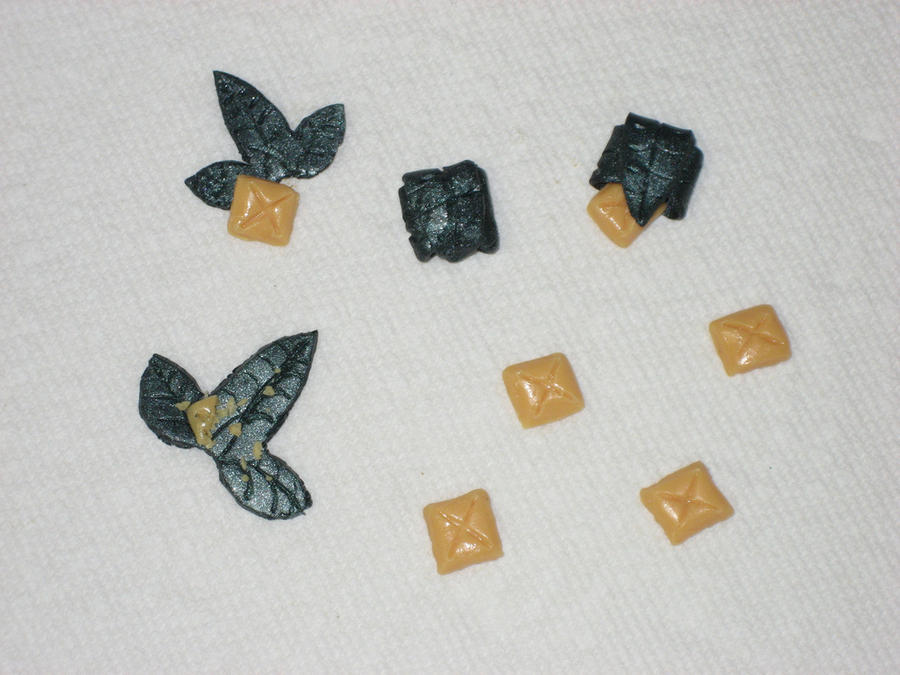
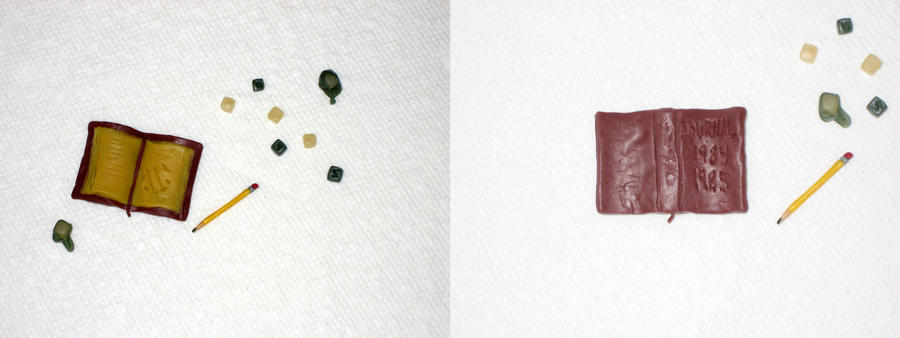
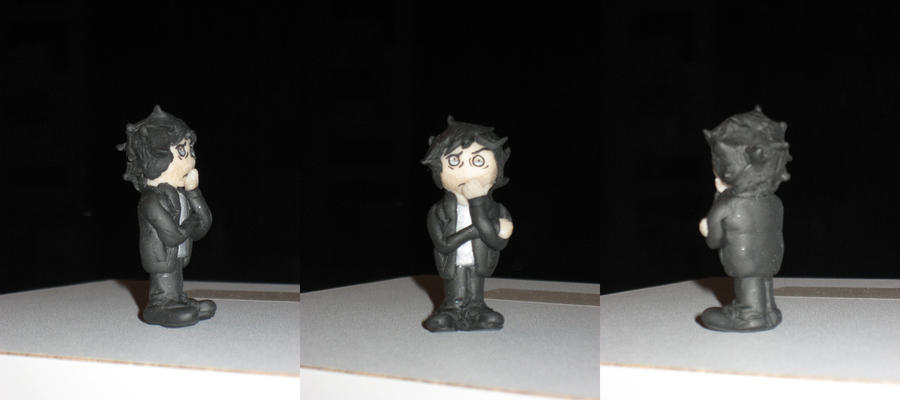
whitten-art-130409-1611694I love tiny things. Love them. Tiny things, filled with tiny details. This is why, somewhere in my closet, I have a box of random tiny dollhouse items that I’ve bought in various places or made myself, despite not ever having owned a dollhouse or the dolls that would accompany it. (My dolls were either baby-sized or tiny. Polly Pocket, anyone?) I have tiny newspapers and books that open; tiny jars of fake Necco Wafers and peppermint sticks; tiny wrapped “Christmas presents;” tiny forks and knives and mugs…I can’t resist them, because they’re just so intricate and cute. And tiny!

It’s also why I own and dote on a tiny Chinese dwarf hamster. Well, okay, so I’ve had bigger pets, too, but anyone who reads Twitter knows Bitty Miss Izzy is like my spirit animal or something, and I am perpetually unable to get over how tiny and cute she and her little paws and little nose and little ears are, which is why I am always photographing and filming her.

It’s also why, in my “spare time,” (haha) I sometimes make tiny models of geektastic things, like a tiny Tenth Doctor (Who) and TARDIS, or a tiny little Toothless from How to Train Your Dragon, or a tiny batch of lembas bread or tiny Rorschach accessories. And, of course, a tiny “Scary Trousers” Neil (Gaiman), based on the drawing of the same name, because who doesn’t need one of those? (Though that one now resides with the real Neil Gaiman, unless he’s given it away or something.)

Aside from the general cuteness of tiny things, I think a main reason I like them is because of the astounding amount of detail that they frequently manage to include, despite size; and as a geek, I’m more than a little inclined to obsess over detail, and particularly the (haha) tiniest details. I like intricacy. And let’s be honest here – I’m not alone. Most geeks are a bit detail-obsessed. Whether it’s every detail of a beloved character’s fictional life or a beloved fictional world, or every detail of a replica convention costume or collectible item, or every detail of minutia about the real-life production process of a favorite show, or trilogy, or what-have-you, we geeks are all about the details.

And being a geek, you know what I really find fascinating? When geekness combines with detailed tininess and produces amazing, awesome, and sometimes useful things. Here are some of my favorites this week:

Via the wonder of 3-D printing (how much do I want a 3-D printer and a 3-D printing pen? So much) I give you: tiny Winterfell.

] from the beautiful, amazing Game of Thrones opening credits. Look at it! Look!! It’s made of plastic and preciousness and precision. It’s under 10 square inches! I want one. (I also adore the entirety of the opening credit of that show, which feature a clockwork map of the story’s locations that is so tiny and intricate and beautiful and clever that it won an Emmy. You can read a cool piece about how the credits are done here.)

But lest you think that 10 square inches is anything special, there’s also this 3-D printed Wing Commander spaceship that is the diameter of a human hair. (Also, did you know there was a Wing Commander movie starring Freddie Prinze, Jr.? I didn’t! Apparently it was terrible.) A human hair! That’s almost too ridiculously tiny to be real, and yet, there it is, in incredible detail, just ready to be accidentally snorted up someone’s nose while they’re eyeing it up close. It’s adorbs, and I want one, even if I’d lose it immediately. I also see great promise for a nano-printer, in that it could conceivably be used to produce tiny bits for a myriad of helpful scientific or medical things, or even to produce an incredibly tiny Iron Man. You know which one I’d use it for first.

Speaking of robotics, how about this little Festo BionicOpter? Granted, it’s not quite as cute or small as a tiny Winterfell or Wing Commander plane, but it does have the benefit of being potentially a bit more useful. It’s an arm-sized quadcopter that “looks and moves like a dragonfly,” and “despite its complexity, the highly integrated system can be operated easily and intuitively via a smartphone.” Wow. I’m kind of in awe. Watch the video; it’s pretty cool. It also makes me wonder how long it’s going to take Festo (or other quadcopter folks) to make even smaller quadcopters. (Or, in a more sinister vein than the dreamy music of the BionicOpter video would have us thinking, how long until we’re going to be seeing things like the heat-sensing, eye-scanning electric shock spider robots of Minority Report? Eep!)

Despite the possible sinister applications of making technological things smaller (and that sort of thing has been around for years in the spy world, where we have things like the key ring spy camera and the DocuPen scanner, I think the current possibilities of the technology that allows things like the above to be made tiny and real is pretty amazing, and am curious to see what the miniaturization geniuses will come up with next.

Also, I think it’s amusing that we live in an age where miniaturization can also be used for practical jokes. I’m ordering my Micro Spy Remote as we speak. So don’t be too distressed if your TV mysteriously starts changing channels on its own next time I come to visit; and until next week, Servo Lectio!

TUESDAY AFTERNOON: Michael Davis

THURSDAY MORNING: Dennis O’Neil